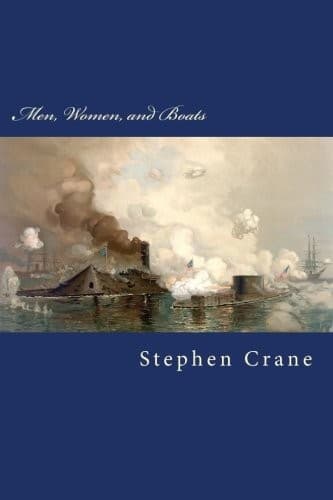
Short stories; United States -- Social life and customs -- 19th century -- Fiction
"Stephen died at three in the morning, the same
sinister hour which carried away our friend Frederic
nineteen months before. At midnight, in Crane's
fourteenth-century house in Sussex, we two tried
to lure back the ghost of Frederic into that house of
ghosts, and to our company, thinking that if reappearing
were ever possible so strenuous a man as
Harold would somehow shoulder his way past the
guards, but he made no sign. I wonder if the less
insistent Stephen will suggest some ingenious method
by which the two can pass the barrier. I can imagine
Harold cursing on the other side, and welcoming
the more subtle assistance of his finely fibred
friend.
"I feel like the last of the Three Musketeers, the
other two gone down in their duel with Death. I
am wondering if, within the next two years, I also
shall get the challenge. If so, I shall go to the competing
ground the more cheerfully that two such
good fellows await the outcome on the other side.
"Ever your friend,
"ROBERT BARR."
The last of the Three Musketeers is gone, now, although he outlived his
friends by some years. Robert Barr died in 1912. Perhaps they are still
debating a joint return.
There could be, perhaps, no better close for a paper on Stephen Crane
than the subjoined paragraph from a letter written by him to a
Rochester editor:--
"The one thing that deeply pleases me is the
fact that men of sense invariably believe me to be
sincere. I know that my work does not amount to
a string of dried beans--I always calmly admit it--but
I also know that I do the best that is in me
without regard to praise or blame. When I was
the mark for every humorist in the country, I went
ahead; and now when I am the mark for only fifty
per cent of the humorists of the country, I go
ahead; for I understand that a man is born into the
world with his own pair of eyes, and he is not at all
responsible for his vision--he is merely responsible
for his quality of personal honesty. To keep
close to this personal honesty is my supreme ambition."
VINCENT STARRETT.
THE OPEN BOAT
A Tale intended to be after the fact. Being the experience of four men
from the sunk steamer "Commodore"
I
None of them knew the color of the sky. Their eyes glanced level, and
were fastened upon the waves that swept toward them. These waves were
of the hue of slate, save for the tops, which were of foaming white,
and all of the men knew the colors of the sea. The horizon narrowed and
widened, and dipped and rose, and at all times its edge was jagged with
waves that seemed thrust up in points like rocks. Many a man ought to
have a bath-tub larger than the boat which here rode upon the sea.
These waves were most wrongfully and barbarously abrupt and tall, and
each froth-top was a problem in small-boat navigation.
Public-domain text, read in full here on John Shaqi.
Reviews
Reviews
No reviews yet
Be the first to share your thoughts on this work.
Join the Discussion
Join the discussion
Sign in to leave a comment or review.
Sign InorCreate an account