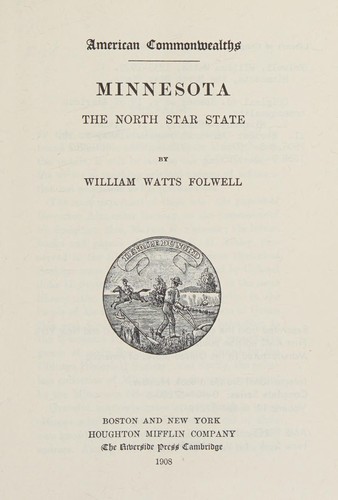
Minnesota, the North Star StateFolwell, William Watts
History
Minnesota, the North Star State
Folwell, William Watts
Minnesota -- History
Chamberlain for himself and others submitted an offer to cut their
claims in two and accept new six per cent. bonds in payment. To this
the legislature promptly agreed, but the electors in the following
November put their veto on the bill. They did the same thing to an act
of 1878 providing for an exchange of internal improvement lands for the
bonds, differing in particulars from a previous act of the same general
tenor.
In his messages of 1879 and 1881 Governor Pillsbury, under the heading
of “Dishonored Bonds,” entreated and implored the legislatures to pay
the honest debt of the state and clear her tarnished honor. His earnest
and impressive appeals had no effect on the former of the two, but the
legislature of 1881 was moved to provide for a special tribunal, to be
composed of judges of the supreme and district courts, to consider and
decide whether the repudiating amendment of 1860 was binding on the
legislature. If the tribunal should hold in the negative, then the old
bonds were to be redeemed by new ones at fifty per cent. of the amount
nominally due. Not one of the judges of the Supreme Court was willing
to serve, and the tribunal was tardily made up of five district judges
designated by the governor. The tribunal met and organized, and nothing
more. An order from the Supreme Court required it to show cause why a
writ of prohibition should not issue, on the ground that the
legislature had not the right to establish such a tribunal. The
attorney-general at the same time protested against its competency, and
had leave to protest further that the act was repugnant to the
constitutional amendment of 1860, which forbade payment of the bonds
unless after an affirmative vote of the electors. This pleading brought
forward as the principal issue the validity of that amendment. The
contentions were exhaustively argued in the Supreme Court by able
counsel. The decision of the court was that the repudiating amendment
of 1860 was obnoxious to that provision of the constitution of the
United States forbidding states from passing any law impairing the
obligations of contracts. The writ of prohibition issued and the
tribunal dissolved. There was no appeal, and the Minnesota legislature
was free to dispose of the bond matter without a referendum. Governor
Pillsbury called that body to meet on October 11. The bondholders were
ready and anxious to accept fifty cents on the dollar. A bill to issue
new 10-30 four and one half per cent. “Minnesota state railroad
adjustment bonds,” to a sufficient amount, was passed after some
contention as to details. A companion bill devoting the proceeds of the
500,000 acres of internal improvement land was passed, and under
constitutional requirement submitted to the electors in November, 1884.
The vote stood: Yes, 31,011; no, 13,589. The presidential vote of the
state in 1880 was 150,484. This vote, therefore, did not indicate so
much a change of sentiment among the people as a willingness to have
Public-domain text, read in full here on John Shaqi.
Reviews
Reviews
No reviews yet
Be the first to share your thoughts on this work.
Elsewhere in the archive
Join the Discussion
Join the discussion
Sign in to leave a comment or review.
Sign InorCreate an account