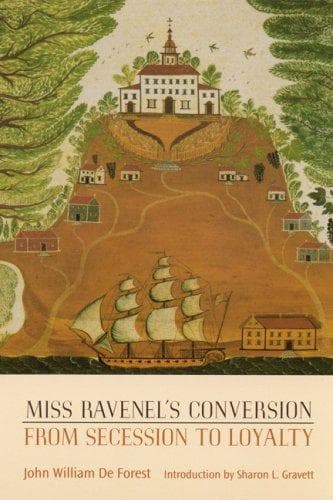
Miss Ravenel's conversion from secession to loyaltyDe Forest, John William
History
Miss Ravenel's conversion from secession to loyalty
De Forest, John William
Historical fiction; United States -- History -- Civil War, 1861-1865 -- Fiction; War stories; Women -- United States -- Fiction
It may seem odd to some sensible people that this learned gentleman of
over fifty should expose his own history so freely to a young fellow
whom he had not seen until half an hour before. But it was a part of the
Doctor's character to suppose that humanity took an interest in him just
as he took an interest in all humanity; and his natural frankness had
been increased by contact with the prevailing communicativeness of his
open-hearted fellow-citizens of the South. I dare say that he would have
unfolded the tale of his exile to an intelligent stage-driver by whom he
might have chanced to sit, with as little hesitation as he poured it
into the ears of this graduate of a distinguished university and
representative of a staid puritanical aristocracy. He had no thought of
claiming admiration for his self-sacrificing loyalty. His story was
worth telling, not because it was connected with his interests, but
because it had to do with his sentiments and convictions. Why should he
not relate it to a stranger who was evidently capable of sympathising
with those sentiments and appreciating those convictions?
But there was another reason for the Doctor's frankness. At that time
every circumstance of the opening civil war, every item of life that
came from hostile South to indignant North, was regarded by all as a
species of public property. If you put down your name on a hotel
register as arrived from Charleston, Savannah, Mobile, New Orleans, or
any other point south of Mason & Dixon's line, you were immediately
addressed and catechised. People wanted to know how you escaped, and why
you tried to escape; and were ready to accord you any credit you
demanded for perilous adventures and patriotic motives; and did not
perceive it nor think a bit ill of you if you showed yourself somewhat
of a romancer and braggart. And you, on the other hand, did not object
to telling your story, but let it out as naturally as a man just rescued
from drowning opens his heart to the sympathising crowd which greets him
on the river bank.
Now Miss Ravenel was a rebel. Like all young people and almost all
women she was strictly local, narrowly geographical in her feelings and
opinions. She was colored by the soil in which she had germinated and
been nurtured; and during that year no flower could be red, white and
blue in Louisiana. Accordingly the young lady listened to the Doctor's
story of his self-imposed exile and to his sarcasms upon the people of
her native city with certain pretty little starts and sniffs of
disapprobation which reminded Colburne of the counterfeit spittings of a
kitten playing anger. She could not under any provocation quarrel with
her father, but she could perseveringly and energetically disagree with
his opinions. When he had closed his tirade and history she broke forth
in a defence of her darling Dixie.
Public-domain text, read in full here on John Shaqi.
Reviews
Reviews
No reviews yet
Be the first to share your thoughts on this work.
Join the Discussion
Join the discussion
Sign in to leave a comment or review.
Sign InorCreate an account