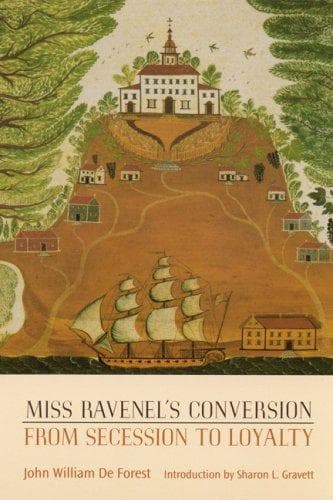
Miss Ravenel's conversion from secession to loyaltyDe Forest, John William
History
Miss Ravenel's conversion from secession to loyalty
De Forest, John William
Historical fiction; United States -- History -- Civil War, 1861-1865 -- Fiction; War stories; Women -- United States -- Fiction
lady, covered hers under a mask of playful raillery.
"Are you not ashamed," she said, "to let me catch you tyrannizing over
my native city?"
"Don't mention it. Havn't the heart to go on much longer. I'll resign
the mayoralty to-day if you will accept it."
"Offer it to my father, and see if I don't accept for him."
This was a more audacious thrust than the young lady was aware of. The
idea of a civilian mayor was one that High Authority considered
feasible, provided a citizen could be found who was loyal enough to
deserve the post, and influential enough to pay for it by building up
that so much-desired Union party.
"A good suggestion," said the Colonel. "I shall respectfully refer it to
the distinguished consideration of the commanding general."
He entertained no such intention, the extras of his mayoralty being
exceedingly important to him in view of the extent and costly nature of
his present domestic establishment.
"Oh, don't!" answered Miss Ravenel.
"Why not? if you please."
"Because that would be bribing me to turn Yankee outright."
This brief passage in a long conversation suggested to Carter that it
might be well for himself to procure some position or profitable
employment for the out-of-work Doctor. If a man seems likely to
appropriate your peaches, one of the best things that you can do is to
offer him somebody else's apples. Moreover he actually felt a sincere
and even strong interest in the worldly welfare of the Ravenels. By a
little dexterous questioning he found that, not only was the Doctor's
college bare of students, but that his railroad stock paid nothing, and
that, in short, he had lost all his property except his house and some
small bank deposits. Ravenel smilingly admitted that he had been justly
punished for investing in anything which bore even a geographical
relation to the crime of slavery. He received with bewildered though
courteously calm astonishment a proposition that he should try his hand
at a sugar speculation.
"I beg pardon. I really don't understand," said he. "I am so
unaccustomed to business transactions."
"Why, you buy the sugar for six cents a pound and sell it for twenty."
"Bless me, what a profit! Why don't business men take advantage of the
opportunity?"
"Because they havn't the opportunity. Because it requires a permit from
the powers that be to get the sugar."
"Oh! confiscated sugar. I comprehend. But I supposed that the
Government--"
"You don't comprehend at all, my dear Doctor. Not confiscated sugar, but
sugar that we can't confiscate--sugar beyond our reach--beyond the
lines. You must understand that the rebels want quinine, salt, shoes,
gold and lots of things. We want sugar and cotton. A barter is effected,
and each party is benefited. I should call it a stupid arrangement and
contrary to the laws of war, only that it is permitted by--by very high
authority. At all events, it is very profitable and perfectly safe."
Public-domain text, read in full here on John Shaqi.
Reviews
Reviews
No reviews yet
Be the first to share your thoughts on this work.
Elsewhere in the archive
Join the Discussion
Join the discussion
Sign in to leave a comment or review.
Sign InorCreate an account