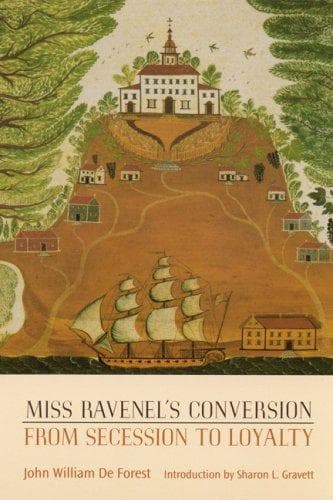
Miss Ravenel's conversion from secession to loyaltyDe Forest, John William
History
Miss Ravenel's conversion from secession to loyalty
De Forest, John William
Historical fiction; United States -- History -- Civil War, 1861-1865 -- Fiction; War stories; Women -- United States -- Fiction
Colburne could say such things because he was a popular favorite. To
people who, like the New Bostonians, did not demand a high finish of
manner, this young man was charming. He was sympathetic, earnest in his
feelings, as frank as such a modest fellow could be, and among friends
had any quantity of expansion and animation. He would get into a gale of
jesting and laughter over a game of whist, provided his fellow players
were in anywise disposed to be merry. On such occasions his eyes became
so bright and his cheeks so flushed that he seemed luminous with good
humor. His laugh was sonorous, hearty, and contagious; and he was not at
all fastidious as to what he laughed at: it was sufficient for him if he
saw that you meant to be witty. In conversation he was very pleasant,
and had only one questionable trick, which was a truly American habit of
hyperbole. When he was excited he had a droll, absent-minded way of
running his fingers through his wavy brown hair, until it stood up in
picturesque masses which were very becoming. His forehead was broad and
clear; his complexion moderately light, with a strong color in the
cheeks; his nose straight and handsome, and other features sufficiently
regular; his eyes of a light hazel, and remarkable for their gentleness.
There was nothing hidden, nothing stern, in his expression--you saw at a
glance that he was the embodiment of frankness and good nature. In
person he was strongly built, and he had increased his vigor by
systematic exercise. He had been one of the best gymnasts and oarsmen in
college, and still kept up his familiarity with swinging-bars and racing
shells. His firm white arms were well set on broad shoulders and a full
chest; and a pair of long, vigorous legs completed an uncommonly fine
figure. Pardonably proud of the strength which he had in part created,
he loved to exhibit gymnastic feats, and to talk of the matches in which
he had been stroke-oar. It was the only subject on which he exhibited
personal vanity. To sum up, he was considered in his set the finest and
most agreeable young man in New Boston.
Public-domain text, read in full here on John Shaqi.
Reviews
Reviews
No reviews yet
Be the first to share your thoughts on this work.
Join the Discussion
Join the discussion
Sign in to leave a comment or review.
Sign InorCreate an account