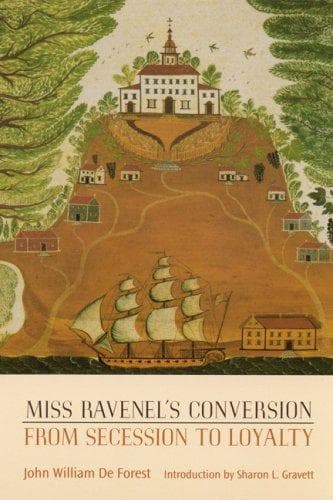
Miss Ravenel's conversion from secession to loyaltyDe Forest, John William
History
Miss Ravenel's conversion from secession to loyalty
De Forest, John William
Historical fiction; United States -- History -- Civil War, 1861-1865 -- Fiction; War stories; Women -- United States -- Fiction
But this was an exceptional piece of stupidity in Colburne, and probably
he would not have been guilty of it but for a spasm of jealousy. He was
not grossly deficient in social tact, any more than in natural
cleverness or in acquired information. Conversation, and very sensible
conversation too, flowed like a river when he came into confluence with
the Ravenels. The prevailing subject, as a matter of course, was the
rebellion. It was every body's subject; it was the nightmare by night
and the delirium by day of the American people; it was the one thing
that no one ignored and no one for an hour forgot. The twenty loyal
millions of the North shuddered with rage at the insolent wickedness of
those conspirators who, merely that they might perpetuate human bondage
and their own political supremacy, proposed to destroy the grandest
social fabric that Liberty ever built, the city of refuge for oppressed
races, the hope of the nations. For men who through such a glorious
temple as this could rush with destroying torches and the cry of "Rule
or ruin," the North felt a horror more passionate than ever, on any
occasion, for any cause, thrilled the bosom of any other people. This
indignation was earnest and wide-spread in proportion to the
civilization of the century and the intelligence of the population. The
hundreds of telegraph lines and thousands of printing presses in the
United States, sent the knowledge of every new treason, and the
reverberation of every throb of patriotic anger, in a day to all
Americans outside of nurseries and lunatic asylums. The excitement of
Germany at the opening of the Thirty Years' War, of England previous to
the Cromwellian struggle, was torpid and partial in comparison with
this outburst of a modern, reading and swiftly-informed free democracy.
As yet there was little bloodshed; the old respect for law and
confidence in the processes of reason could not at once die, and men
still endeavored to convince each other by argument while holding the
pistol to each other's heads; but from the St. Lawrence to the Gulf
there was a spiritual preparedness for slaughter which was to end in
such murderous contests as should make ensanguined Europe rise from its
thousand battle-fields to stare in wonder.
Public-domain text, read in full here on John Shaqi.
Reviews
Reviews
No reviews yet
Be the first to share your thoughts on this work.
Join the Discussion
Join the discussion
Sign in to leave a comment or review.
Sign InorCreate an account