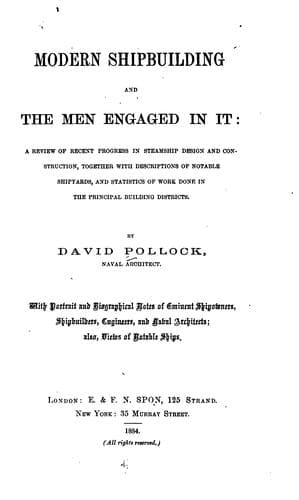
Modern shipbuilding and the men engaged in itPollock, David
History
Modern shipbuilding and the men engaged in it
Pollock, David
Shipbuilding -- Great Britain
+-------+-------------------------------------------------------+
| | Gross Tonnage of Vessels built of |
| +-------------------+---------------+-------------------+
| Year. | Iron and Steel. | Wood. | Excess Tonnage in |
| | | | Iron and Steel. |
+-------+-------------------+---------------+-------------------+
| 1879 | 484,636 | 26,186 | 458,450 |
| 1880 | 525,568 | 19,938 | 505,630 |
| 1881 | 730,686 | 18,107 | 712,579 |
| 1882 | 913,519 | 14,850 | 898,669 |
| 1883 | 1,012,735 | 15,202 | 997,533 |
+-------+-------------------+---------------+-------------------+
|Totals,| 3,667,144 | 94,283 | 3,572,861 |
+-------+-------------------+---------------+-------------------+
_Tonnage of Wooden Vessels registered in the United Kingdom which
were Lost, Broken up, &c., during each of the years 1879 to 1883,
with Tonnage of Wooden Vessels built and registered in the United
Kingdom during the same period._
+-------+----------------------------+-------------------+
| | Tonnage of Wooden Vessels. | Excess of Vessels |
| Year. +-------------+--------------+ lost over those |
| | Lost. | Built. | built. |
+-------+-------------+--------------+-------------------+
| 1879 | 149,828 | 26,186 | 123,642 |
| 1880 | 173,065 | 19,938 | 153,127 |
| 1881 | 170,283 | 18,107 | 152,176 |
| 1882 | 166,809 | 14,850 | 151,959 |
| 1883 | 144,138 | 15,202 | 128,936 |
+-------+-------------+--------------+-------------------+
|Totals,| 804,123 | 94,283 | 709,840 |
+-------+-------------+--------------+-------------------+
Whence it appears that while 709,840 tons of the 1,779,112 tons
of ships removed from the register during the last five years
were wooden vessels, only 94,283 tons of the 3,667,144 tons built
and registered in the United Kingdom during the same period
were constructed of that material. In other words, wooden ships
represent 45 per cent. of the total losses, while they only
represent 2·5 per cent. of the total tonnage built and added to the
register during the five years in question.
Just as the introduction or general adoption of the compound
engine marked an epoch in the history of shipbuilding and marine
propulsion, so now the introduction of “mild steel” or “ingot
iron” as a material for shipbuilding, together with the more
extended adoption of water ballast, and the rapid development of the
continuous-cellular system of construction, may be said to constitute
a fresh starting point in the history of the industry.
Public-domain text, read in full here on John Shaqi.
Reviews
Reviews
No reviews yet
Be the first to share your thoughts on this work.
Join the Discussion
Join the discussion
Sign in to leave a comment or review.
Sign InorCreate an account