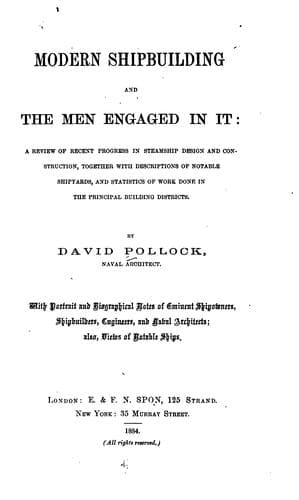
Modern shipbuilding and the men engaged in itPollock, David
History
Modern shipbuilding and the men engaged in it
Pollock, David
Shipbuilding -- Great Britain
+-------------------------------------+
| TABLE OF YEARLY TONNAGE |
+-------+---------+---------+---------+
| YEARS | CLYDE | TYNE | WEAR |
| | TON’AGE | TON’AGE | TON’AGE |
+-------+---------+---------+---------+
| 1860 | 47,800 | | 40,200 |
| 1861 | 66,800 | | 46,800 |
| 1862 | 69,900 | | 56,900 |
| 1863 | 123,300 | | 70,000 |
| 1864 | 178,500 | | 72,000 |
| 1865 | 154,000 | | 73,100 |
| 1866 | 124,500 | | 62,700 |
| 1867 | 108,000 | | 52,200 |
| 1868 | 169,600 | | 70,300 |
| 1869 | 192,300 | | 72,400 |
| 1870 | 180,400 | | 70,100 |
| 1871 | 196,300 | | 81,900 |
| 1872 | 230,300 | | 131,800 |
| 1873 | 232,900 | | 99,400 |
| 1874 | 262,400 | | 88,000 |
| 1875 | 211,800 | | 79,900 |
| 1876 | 174,800 | | 54,100 |
| 1877 | 169,700 | | 87,600 |
| 1878 | 222,300 | 126,300 | 109,900 |
| 1879 | 174,800 | 139,800 | 92,200 |
| 1880 | 248,700 | 149,100 | 116,200 |
| 1881 | 341,000 | 177,200 | 148,000 |
| 1882 | 391,900 | 208,400 | 212,500 |
| 1883 | 419,600 | 216,600 | 212,300 |
+-------+---------+---------+---------+
With the year just spoken of a first and very considerable rise in
the tonnage output set in and continued till the year 1864, in which
year it amounted to 178,500 tons. Various causes of an exceptional
nature, or at least, causes apart from the natural progress due
to the growth of shipping, were at work in bringing about this
increase in the output. The most prominent of these was the necessity
which arose for filling up the gaps produced by the withdrawal of
many swift steamers from the river and coasting trade to meet the
requirements of individuals interested in running the blockade of
the ports of the Southern States of America. Between Aprils 1862-3
alone, as many as 30 vessels actively connected in some way with
the Clyde and coasting service, were sold for that purpose, and the
replacement of these vessels went a considerable way in occasioning
the briskness. Another and more abiding cause, however, was the
demand for vessels for the cotton-carrying trade. This arose chiefly
from the blockade of the American ports, causing cotton to come right
from the East Indies and China; and in consequence of the longer
voyage many more ships were necessary to carry on the trade. The fact
that more than an average number of wrecks had occurred during the
two previous winters, together with an increase of the trade between
Britain and France as the result of Mr Cobden’s commercial treaty,
were elements lending impetus to the briskness in the shipbuilding of
the time.
Public-domain text, read in full here on John Shaqi.
Reviews
Reviews
No reviews yet
Be the first to share your thoughts on this work.
Elsewhere in the archive
Join the Discussion
Join the discussion
Sign in to leave a comment or review.
Sign InorCreate an account