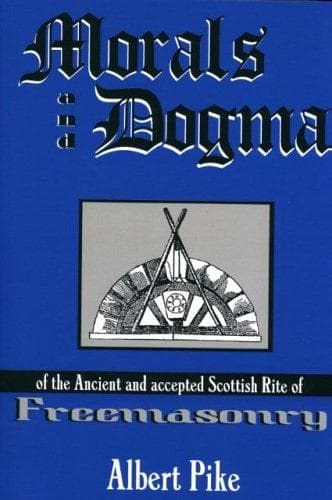
Morals and Dogma of the Ancient and Accepted Scottish Rite of FreemasonryPike, Albert
Religion
Morals and Dogma of the Ancient and Accepted Scottish Rite of Freemasonry
Pike, Albert
Freemasons
We do not know even the _outside_ life of men. We are not competent to
pronounce even on their _deeds_. We do not know half the acts of
wickedness or virtue, even of our most immediate fellows. We cannot say,
with certainty, even of our nearest friend, that he has not committed a
particular sin, and broken a particular commandment. Let each man ask
his own heart! Of how many of our best and of our worst acts and
qualities are our most intimate associates utterly unconscious! How many
virtues does not the world give us credit for, that we do not possess;
or vices condemn us for, of which we are not the slaves! It is but a
small portion of our evil deeds and thoughts that ever comes to light;
and of our few redeeming goodnesses, the largest portion is known to
God alone.
We shall, therefore, be just in judging of other men, only when we are
charitable; and we should assume the prerogative of judging others only
when the duty is forced upon us; since we are so almost certain to err,
and the consequences of error are so serious. No man need covet the
office of judge; for in assuming it he assumes the gravest and most
oppressive responsibility. Yet you have assumed it; we all assume it;
for man is ever ready to judge, and ever ready to condemn his neighbor,
while upon the same state of case he acquits himself. See, therefore,
that you exercise your office cautiously and charitably, lest, in
passing judgment upon the criminal, you commit a greater wrong than that
for which you condemn him, and the consequences of which must be
eternal.
Public-domain text, read in full here on John Shaqi.
Reviews
Reviews
No reviews yet
Be the first to share your thoughts on this work.
Elsewhere in the archive
Join the Discussion
Join the discussion
Sign in to leave a comment or review.
Sign InorCreate an account