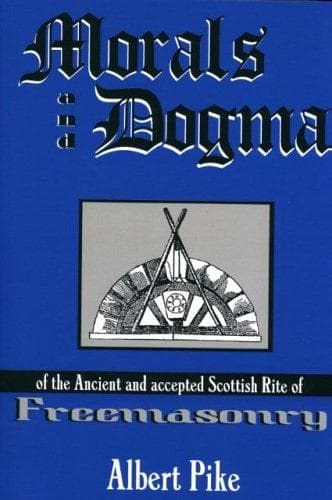
Morals and Dogma of the Ancient and Accepted Scottish Rite of FreemasonryPike, Albert
Religion
Morals and Dogma of the Ancient and Accepted Scottish Rite of Freemasonry
Pike, Albert
Freemasons
There are hard lessons in the school of God's Providence; and yet the
school of life is carefully adjusted, in all its arrangements and tasks,
to man's powers and passions. There is no extravagance in its teachings;
nor is anything done for the sake of present effect. The whole course of
human life is a conflict with difficulties; and, if rightly conducted, a
progress in improvement. It is never too late for man to learn. Not part
only, but the whole, of life is a school. There never comes a time, even
amidst the decays of age, when it is fit to lay aside the eagerness of
acquisition, or the cheerfulness of endeavor. Man walks, all through the
course of life, in patience and strife, and sometimes in darkness; for,
from patience is to come perfection; from strife, triumph is to issue;
from the cloud of darkness the lightning is to flash that shall open the
way to eternity.
Let the Mason be faithful in the school of life, and to all its lessons!
Let him not learn nothing, nor care not whether he learns or not. Let
not the years pass over him, witnesses of only his sloth and
indifference; or see him zealous to acquire everything but virtue. Nor
let him labor only for himself; nor forget that the humblest man that
lives is his brother, and hath a claim on his sympathies and kind
offices; and that beneath the rough garments which labor wears may beat
hearts as noble as throb under the stars of princes.
God, who counts by souls, not stations,
Loves and pities you and me;
For to Him all vain distinctions
Are as pebbles on the sea.
Nor are the other duties inculcated in this Degree of less importance.
Truth, a Mason is early told, is a Divine attribute and the foundation
of every virtue; and frankness, reliability, sincerity,
straightforwardness, plain-dealing, are but different modes in which
Truth develops itself. The dead, the absent, the innocent, and those
that trust him, no Mason will deceive willingly. To all these he owes a
nobler justice, in that they are the most certain trials of human
Equity. Only the most abandoned of men, said Cicero will deceive him,
who would have remained uninjured if he had not trusted. All the noble
deeds that have beat their marches through succeeding ages have
proceeded from men of truth and genuine courage. The man who is always
true is both virtuous and wise; and thus possesses the greatest guards
of safety: for the law has not power to strike the virtuous; nor can
fortune subvert the wise.
The bases of Masonry being morality and virtue, it is by studying one
and practising the other, that the conduct of a Mason becomes
irreproachable. The good of Humanity being its principal object,
disinterestedness is one of the first virtues that it requires of its
members; for that is the 'source of justice and beneficence.
Public-domain text, read in full here on John Shaqi.
Reviews
Reviews
No reviews yet
Be the first to share your thoughts on this work.
Elsewhere in the archive
Join the Discussion
Join the discussion
Sign in to leave a comment or review.
Sign InorCreate an account