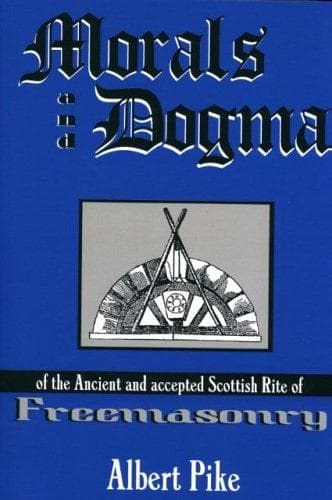
Morals and Dogma of the Ancient and Accepted Scottish Rite of FreemasonryPike, Albert
Religion
Morals and Dogma of the Ancient and Accepted Scottish Rite of Freemasonry
Pike, Albert
Freemasons
But we art _not_ insensible brutes, who can refuse the call of reason
and conscience. The soul is capable of remorse. When the great
dispensations of life press down upon us, we weep, and suffer and
sorrow. And sorrow and agony desire other companionships than
worldliness and irreligion. We are not willing to bear those burdens of
the heart, fear, anxiety, disappointment, and trouble, without any
object or use. We are not willing to suffer, to be sick and afflicted,
to have our days and months lost to comfort and joy, and overshadowed
with calamity and grief, without advantage or compensation; to barter
away the dearest treasures, the very sufferings, of the heart; to sell
the life-blood from failing frame and fading cheek, our tears of
bitterness and groans of anguish, for nothing. Human nature, frail,
feeling, sensitive, and sorrowing, cannot bear to suffer for nought.
Everywhere, human life is a great and solemn dispensation. Man,
suffering, enjoying, loving, hating, hoping, and fearing, chained to the
earth and yet exploring the far recesses of the universe, has the power
to commune with God and His angels. Around this great action of
existence the curtains of Time are drawn; but there are openings through
them which give us glimpses of eternity. God looks down upon this scene
of human probation. The wise and the good in all ages have interposed
for it, with their teachings and their blood. Everything that exists
around us, every movement in nature, every counsel of Providence, every
interposition of God, centres upon one point--the fidelity of man. And
even if the ghosts of the departed and remembered could come at midnight
through the barred doors of our dwellings, and the shrouded dead should
glide through the aisles of our churches and sit in our Masonic Temples,
their teachings would be no more eloquent and impressive than the dread
realities of life; than those memories of misspent years, those ghosts
of departed opportunities, that, pointing to our conscience and
eternity, cry continually in our ears, "_Work while the day lasts! for
the night of death cometh, in which no man can work_."
There are no tokens of public mourning for the calamity of the soul. Men
weep when the body dies; and when it is borne to its rest, they follow
it with sad and mournful procession. But for the dying soul there is no
open lamentation; for the lost soul there are no obsequies.
And yet the mind and soul of man have a value which nothing else has.
They are worth a care which nothing else is worth; and to the single,
solitary individual, they ought to possess an interest which nothing
else possesses. The stored treasures of the heart, the unfathomable
mines that are in the soul to be wrought, the broad and boundless realms
of Thought, the freighted argosy of man's hopes and best affections, are
brighter than gold and dearer than treasure.
Public-domain text, read in full here on John Shaqi.
Reviews
Reviews
No reviews yet
Be the first to share your thoughts on this work.
Elsewhere in the archive
Join the Discussion
Join the discussion
Sign in to leave a comment or review.
Sign InorCreate an account