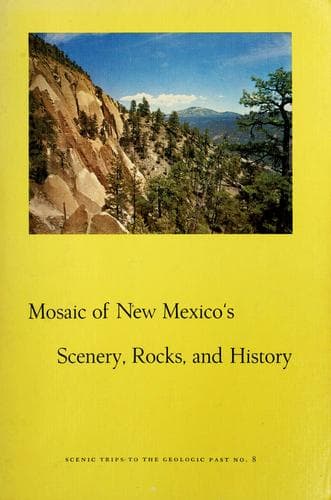
Mosaic of New Mexico's Scenery, Rocks, and History
History
Mosaic of New Mexico's Scenery, Rocks, and History
Geology -- New Mexico; New Mexico -- Description and travel; New Mexico -- History
The ruins of the old San Geronimo mission at Taos represent one of the
most historic and fateful in all the Southwest. It was there that two
priests were murdered in 1680 during the first days of the Pueblo
Revolt. It was there that Po-pé sowed the first seeds of that rebellion.
Again in 1696, the Taos Indians sought to free themselves from Spanish
control by killing their priests and other Spaniards in the vicinity.
Again they were subdued. In 1847, when the Americans annexed New Mexico,
the Taos Indians tried once more to gain their independence. Inflamed by
Mexican citizens who refused to accept American authority, they attacked
the Americans at Fernando de Taos, killing nine of them. Governor
Charles Bent, builder of the famous Bent’s Fort on the Santa Fe Trail,
was among those killed. On February 3, 1847, the American army in New
Mexico laid siege to the village and the Indians fortified themselves in
the mission. It became the Alamo of the Taos people. American artillery
was brought to bear, and the walls of the ancient church were battered
down; the Indians fled, first to the village and then into the
mountains, leaving behind 150 dead and many wounded. They were finally
forced to surrender, and their leaders were hung. Those so hung remain
martyrs to this day. The ruins of the Taos mission, built three and a
quarter centuries ago, still can be seen. They are a stark landmark to
the stubborn independence of the people of Taos.
[Illustration: (_Forest Service, U.S.D.A._)
Souvenir of the American army’s work in 1847: Taos Pueblo mission]
The traditions and ceremonials of Taos are well preserved. Their arts
and crafts, however, have declined and are not of the high quality found
in some of the other pueblos. Their ceremonials are excellent and are
noted for their beauty and precision. The feast day of San Geronimo,
September 30, is the most important event of the year.
Tesuque Pueblo
Tesuque is a small village, perhaps numbering no more than 150 persons.
Even though it has always been small, it holds a major place in the
history of New Mexico. It was at Tesuque that the first blood was shed
in the Pueblo Revolt of 1680. On August 9, Cristobal de Herrera was
murdered, and two Tesuque Indians rushed to Santa Fe to warn the Spanish
governor of the impending rebellion. The Indian leaders, now aware that
their plot was known, moved the date of the revolt from August 13 to
August 10. On August 10, Father Pio, in charge of the Tesuque mission,
went out from Santa Fe to say Mass and also was murdered.
[Illustration: (_Forest Service, U.S.D.A._)
Most-painted church in America?... Ranchos de Taos]
Although its handicrafts are of poor quality, the Tesuque Indian
ceremonials are colorful and authentic. The people have retained much of
their early culture while living in proximity to the white man (Santa Fe
is only nine miles distant). The pueblo’s most important festival falls
on November 12.
Public-domain text, read in full here on John Shaqi.
Reviews
Reviews
No reviews yet
Be the first to share your thoughts on this work.
Elsewhere in the archive
Join the Discussion
Join the discussion
Sign in to leave a comment or review.
Sign InorCreate an account