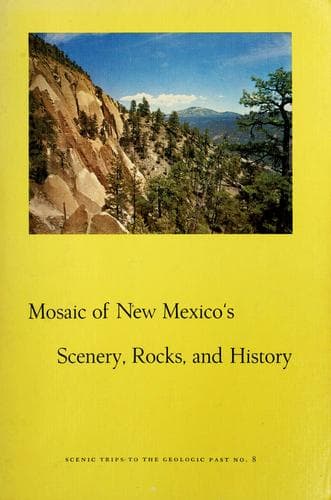
Mosaic of New Mexico's Scenery, Rocks, and History
History
Mosaic of New Mexico's Scenery, Rocks, and History
Geology -- New Mexico; New Mexico -- Description and travel; New Mexico -- History
East-central New Mexico, like the northeast, is an area of plains and
mountains. Here the buffalo roamed, and in their place, cattle now
utilize the hardy and nutritious grasses of the High Plains. Mountains
are the Manzano, southeast of Albuquerque, and Sierra Blanca, near
Carrizozo, as well as numerous minor ranges. Also in this region is some
harsh and desolate country, seared by the southwestern sun and lacking
in rainfall, but supporting the exotic plants and wildlife typical of
the Sonoran desert regions.
While the desert regions may not be attractive to the eye, they should
be appreciated for their part in the historical mosaic. In the area east
of the Rio Grande is the northern half of the well-known White Sands
Missile Range, one of the significant test centers in the rocket and
space age. It was also in this arid region that the first atomic bomb
was exploded (southeast of Socorro).
The early use of this desert, however, emphasized its harshness. For
centuries, the Spanish suffered across this waterless waste on their way
from Chihuahua in Old Mexico to Santa Fe, for this was the Jornada del
Muerto, journey of death, the hardest and most dangerous part of the
trip over the Camino Real. The Camino Real was the lifeline of New
Mexico from 1598 until the Santa Fe Trail was opened in 1821, and all
visitors during that period were obliged to cross this arid section. A
modern rocket crosses in mere seconds what took the Spaniards many days.
[Illustration: (_Forest Service, U.S.D.A._)
Who says this is desert country?... Sierra Blanca from U.S. 70]
In the Manzano Mountains, there are numerous Indian ruins which
represent the eastern fringes of the pueblo-building Indians of New
Mexico. These ruined villages have been given the name by historians of
“cities that died of fear,” fear of the vicious Apache and Comanche
tribes. For centuries, these brave village people tilled their crops and
lived peacefully on the land. Then, in the thirteenth, fourteenth, and
fifteenth centuries, the great migrations of Plains Indians that pushed
into the Southwest gradually did their deadly work. One by one the
villages succumbed, until by 1700 few people remained, and these were
ultimately killed or driven into the sanctuary of the Rio Grande
pueblos. It is awesome to stand mid the rubble of one of those ancient
cities and imagine the circumstances of its demise.
In the eastern part of this section was the heart of the High Plains
cattle empires. Here is a land that once belonged to the great cattle
barons, a land of free range, the home of the cowboy. Although it is
fenced today, it is still a land of cattle and is still very close to
the early days of the cattleman.
Public-domain text, read in full here on John Shaqi.
Reviews
Reviews
No reviews yet
Be the first to share your thoughts on this work.
Elsewhere in the archive
Join the Discussion
Join the discussion
Sign in to leave a comment or review.
Sign InorCreate an account