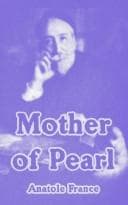
France -- Social life and customs -- Fiction; Short stories, French -- Translations into English
He had never meditated on the origin of wealth, nor upon the inequality
of human conditions. He believed firmly that if this life should prove
hard, the life to come could not fail to redress the balance, and this
hope upheld him. He did not resemble those thievish and miscreant Merry
Andrews who sell their souls to the devil. He never blasphemed God’s
name; he lived uprightly, and although he had no wife of his own, he did
not covet his neighbour’s, since woman is ever the enemy of the strong
man, as it appears by the history of Samson recorded in the Scriptures.
In truth, his was not a nature much disposed to carnal delights, and it
was a greater deprivation to him to forsake the tankard than the Hebe
who bore it. For whilst not wanting in sobriety, he was fond of a drink
when the weather waxed hot. He was a worthy man who feared God, and was
very devoted to the Blessed Virgin.
Never did he fail on entering a church to fall upon his knees before the
image of the Mother of God, and offer up this prayer to her:
“Blessed Lady, keep watch over my life until it shall please God that I
die, and when I am dead, ensure to me the possession of the joys of
paradise.”
II
Now on a certain evening after a dreary wet day, as Barnaby pursued his
road, sad and bent, carrying under his arm his balls and knives wrapped
up in his old carpet, on the watch for some barn where, though he might
not sup, he might sleep, he perceived on the road, going in the same
direction as himself, a monk, whom he saluted courteously. And as they
walked at the same rate they fell into conversation with one another.
“Fellow traveller,” said the monk, “how comes it about that you are
clothed all in green? Is it perhaps in order to take the part of a
jester in some mystery play?”
“Not at all, good father,” replied Barnaby. “Such as you see me, I am
called Barnaby, and for my calling I am a juggler. There would be no
pleasanter calling in the world if it would always provide one with
daily bread.”
“Friend Barnaby,” returned the monk, “be careful what you say. There is
no calling more pleasant than the monastic life. Those who lead it are
occupied with the praises of God, the Blessed Virgin, and the saints;
and, indeed, the religious life is one ceaseless hymn to the Lord.”
Barnaby replied—
“Good father, I own that I spoke like an ignorant man. Your calling
cannot be in any respect compared to mine, and although there may be
some merit in dancing with a penny balanced on a stick on the tip of
one’s nose, it is not a merit which comes within hail of your own.
Gladly would I, like you, good father, sing my office day by day, and
especially the office of the most Holy Virgin, to whom I have vowed a
singular devotion. In order to embrace the monastic life I would
willingly abandon the art by which from Soissons to Beauvais I am well
known in upwards of six hundred towns and villages.”
Public-domain text, read in full here on John Shaqi.
Reviews
Reviews
No reviews yet
Be the first to share your thoughts on this work.
Join the Discussion
Join the discussion
Sign in to leave a comment or review.
Sign InorCreate an account