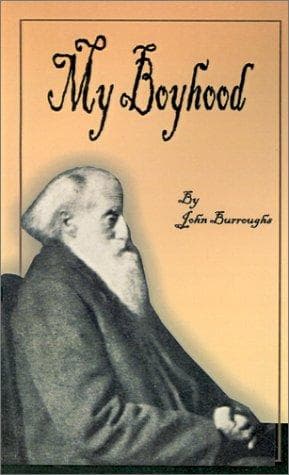
Burroughs, John, 1837-1921 -- Childhood and youth; Naturalists -- New York (State) -- Biography
The farm work to which I was early called upon to lend a hand, as I have
said, revolved around the dairy cow. Her paths were in the fields and
woods, her sonorous voice was upon the hills, her fragrant breath was
upon every breeze. She was the centre of our industries. To keep her
in good condition, well pastured in summer and well housed and fed in
winter, and the whole dairy up to its highest point of efficiency--to
this end the farmer directed his efforts. It was an exacting occupation.
In summer the day began with the milking and ended with the milking; and
in winter it began with the foddering and ended with the foddering, and
the major part of the work between and during both seasons had for its
object, directly or indirectly, the well-being of the herd. Getting the
cows and turning away the cows in summer was usually the work of the
younger boys; turning them out of the stable and putting them back in
winter was usually the work of the older. The foddering them from the
stack in the field in winter also fell to the lot of the older members
of the family.
In milking we all took a hand when we had reached the age of about ten
years, Mother and my sisters usually doing their share. At first we
milked the cows in the road in front of the house, setting the pails of
milk on the stone work; later we milked them in a yard in the orchard
behind the house, and of late years the milking is done in the stable.
Mother said that when they first came upon the farm, as she sat milking
a cow in the road one evening, she saw a large black animal come out
of the woods out where the clover meadow now is, and cross the road and
disappear in the woods on the other side. Bears sometimes carried off
the farmers' hogs in those days, boldly invading the pens to do so. My
father kept about thirty cows of the Durham breed; now the dairy herds
are made up of Jerseys or Holsteins. Then the product that went to
market was butter, now it is milk. Then the butter was made on the farm
by the farmer's wife or the hired girl, now it is made in the creameries
by men. My mother made most of the butter for nearly forty years,
packing thousands of tubs and firkins of it in that time. The milk was
set in tin pans on a rack in the milk house for the cream to rise, and
as soon as the milk clabbered it was skimmed.
Public-domain text, read in full here on John Shaqi.
Reviews
Reviews
No reviews yet
Be the first to share your thoughts on this work.
Join the Discussion
Join the discussion
Sign in to leave a comment or review.
Sign InorCreate an account