For me the major part of these creatures are not chimeras but objects of
rational study. The dragon, in place of being a creature evolved out of
the imagination of Aryan man by the contemplation of lightning flashing
through the caverns which he tenanted, as is held by some mythologists, is
an animal which once lived and dragged its ponderous coils, and perhaps
flew; which devastated herds, and on occasions swallowed their shepherd;
which, establishing its lair in some cavern overlooking the fertile plain,
spread terror and destruction around, and, protected from assault by dread
or superstitious feeling, may even have been subsidised by the
terror-stricken peasantry, who, failing the power to destroy it, may have
preferred tethering offerings of cattle adjacent to its cavern to having
it come down to seek supplies from amongst their midst.[1]
To me the specific existence of the unicorn seems not incredible, and, in
fact, more probable than that theory which assigns its origin to a lunar
myth.[2]
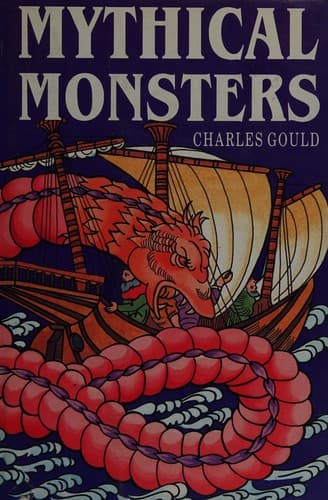
Again, believing as I do in the existence of some great undescribed
inhabitant of the ocean depths, the much-derided sea-serpent, whose home
seems especially to be adjacent to Norway, I recognise this monster as
originating the myths of the midgard serpent which the Norse Elder Eddas
have collected, this being the contrary view to that taken by
mythologists, who invert the derivation, and suppose the stories current
among the Norwegian fishermen to be modified versions of this important
element of Norse mythology.[3]
I must admit that, for my part, I doubt the general derivation of myths
from "the contemplation of the visible workings of external nature."[4] It
seems to me easier to suppose that the palsy of time has enfeebled the
utterance of these oft-told tales until their original appearance is
almost unrecognisable, than that uncultured savages should possess powers
of imagination and poetical invention far beyond those enjoyed by the most
instructed nations of the present day; less hard to believe that these
wonderful stories of gods and demigods, of giants and dwarfs, of dragons
and monsters of all descriptions, are transformations than to believe them
to be inventions.[5]
The author of _Atlantis_,[6] indeed, claims that the gods and goddesses of
the ancient Greeks, the Phœnicians, the Hindoos, and the Scandinavians
were simply the kings, queens, and heroes of Atlantis, and the acts
attributed to them in mythology a confused recollection of real historical
events. Without conceding the _locus_ of the originals, which requires
much greater examination than I am able to make at the present time, I
quite agree with him as to the principle. I believe that the mythological
deities represent a confused chronology of far-distant times, and that the
destruction of the Nemean lion, the Lernean hydra, and the Minotaur are
simply the records of acts of unusual bravery in combating ferocious
animals.
Public-domain text, read in full here on John Shaqi.
Reviews
Reviews
No reviews yet
Be the first to share your thoughts on this work.
Join the Discussion
Join the discussion
Sign in to leave a comment or review.
Sign InorCreate an account