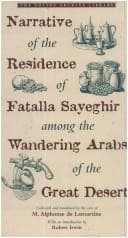
Narrative of the residence of Fatalla Sayeghir among the wandering Arabs of the great desertLamartine, Alphonse de
History
Narrative of the residence of Fatalla Sayeghir among the wandering Arabs of the great desert
Lamartine, Alphonse de
Arabian Peninsula -- Description and travel
Other women walked beside the camels to milk them into
_cahahs_,--wooden pails, containing four litres: these were passed from
hand to hand to slake the thirst of the troops. The camels ate as they
marched, from bags hung round their necks; and when their riders wished
to sleep, they lay at their length on the camels, their feet secured
in the sacks to protect them from falling. The slow and measured step
of the camels invites to sleep, and I have never slept better than on
this march. The wife of the Emir Faress was delivered in her howdah of
a son, who received the name of Harma, from the place we were passing
when he came into the world: it is at the confluence of the Tigris
and Euphrates. We were soon after joined by three tribes: El Harba,
El Suallema, and El Abdalla. We reckoned seven thousand tents when
Dehass joined us. This imposing succour reassured him; we gave him a
magnificent supper, after which he affixed his seal to our treaty.
The enemy was still at the distance of a day’s journey. Our men and
horses being in great need of repose, the Drayhy commanded a two days’
rest; but the assailants did not allow us the desired truce. As soon
as the report of our approach reached them, they began their march,
and the next day thirty thousand men were encamped an hour from us.
The Drayhy immediately advanced his army to the banks of the river,
fearing that our supply of water might be intercepted; and we took up a
position near the village of El Hutta.
The next day, the Drayhy sent a letter to the chiefs of the five tribes
who were come to attack us: Douockhry, chief of El Fedhay; Saker Ebn
Hamed, chief of El Modianu; Mohdi Ebn Hud, of El Sabha; Bargiass, of
Mouayega; and Amer Ebn Noggies, chief of Mehayeda. This attempt was
wholly unsuccessful: the answer was a declaration of war, the style of
which clearly proved that our intentions had been misrepresented, and
that the chiefs acted under foreign influence.
Public-domain text, read in full here on John Shaqi.
Reviews
Reviews
No reviews yet
Be the first to share your thoughts on this work.
Elsewhere in the archive
Join the Discussion
Join the discussion
Sign in to leave a comment or review.
Sign InorCreate an account