Country life -- England; Natural history -- Outdoor books; Nature study
As the summer wanes they haunt the hawthorn hedge by the roadside,
leaving the interior of the copse, and may often be seen on the dry and
dusty sward. When chiffchaff and willow-wren first come they remain in
the treetops, but in the summer descend into the lower bushes, and, like
the nightingales, come out upon the sward by the wayside. Nightingale
Copse is also a great favourite with cuckoos. There are a few oaks in
it, and in the meadows in the rear many detached hawthorn bushes, and
two or three small groups of trees, chestnuts, lime, and elm. From the
hawthorns to the elms, and from the elms to the oaks, the cuckoos
continually circulate, calling as they fly.
One morning in May, while resting on a rail in the copse, I heard four
calling close by, the furthest not a hundred yards distant, and as they
continually changed their positions flying round there was always one in
sight. They circled round, singing; the instant one ceased another took
it up, a perfect madrigal. In the evening, at eight o'clock, I found
them there again, still singing. The same detached groups of trees are
much frequented by wood-pigeons, especially towards autumn.
Rooks prefer to perch on the highest branches, wood-pigeons more in the
body of the tree, and when the boughs are bare of leaves a flock of the
latter may be recognised in this way as far as the eye can see, and when
the difference of colour is rendered imperceptible by distance. The
wood-pigeon when perched has a rounded appearance; the rook a longer and
sharper outline.
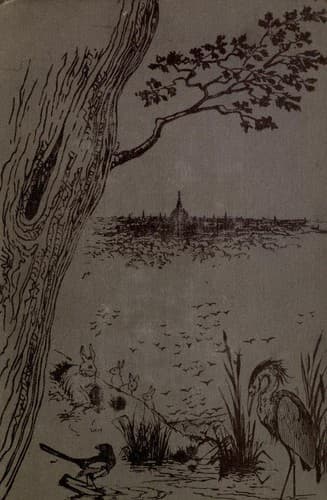
By one corner of the copse there is an oak, hollow within, but still
green and flourishing. The hollow is black and charred; some mischievous
boys must have lighted a fire inside it, just as the ploughboys do in
the far away country. A little pond in the meadow close by is so
overhung by another oak, and so surrounded with bramble and hawthorn,
that the water lies in perpetual shade. It is just the spot where, if
rabbits were about, one might be found sitting out on the bank under the
brambles. This overhanging oak was broken by the famous October snow,
1880, further splintered by the gales of the next year, and its trunk is
now split from top to bottom as if with wedges.
These meadows in spring are full of cowslips, and in one part the
meadow-orchis flourishes. The method of making cowslip balls is
universally known to children, from the most remote hamlet to the very
verge of London, and the little children who dance along the green sward
by the road here, if they chance to touch a nettle, at once search for a
dock leaf to lay on it and assuage the smart. Country children, and
indeed older folk, call the foliage of the knotted figwort cutfinger
leaves, as they are believed to assist the cure of a cut or sore.
Public-domain text, read in full here on John Shaqi.
Reviews
Reviews
No reviews yet
Be the first to share your thoughts on this work.
Join the Discussion
Join the discussion
Sign in to leave a comment or review.
Sign InorCreate an account