Country life -- England; Natural history -- Outdoor books; Nature study
Raspberry suckers shoot up in one part of the copse; the fruit is
doubtless eaten by the birds. Troops of them come here, travelling along
the great hedge by the wayside, and all seem to prefer the outside trees
and bushes to the interior of the copse. This great hedge is as wide as
a country double mound, though it has but one ditch; the thick hawthorn,
blackthorn, elder, and bramble--the oaks, elms, ashes, and firs form, in
fact, almost a cover of themselves.
In the early spring, when the east wind rushes with bitter energy across
the plains, this immense hedge, as far as it extends, shelters the
wayfarer, the road being on the southern side, so that he can enjoy such
gleams of sunshine as appear. In summer the place is, of course for the
same reason, extremely warm, unless the breeze chances to come up strong
from the west, when it sweeps over the open cornfields fresh and sweet.
Stoats and weasels are common on the mound, or crossing the road to the
corn; they seem more numerous in autumn, and I fear leveret and
partridge are thinned by them.
Mice abound; in spring they are sometimes up in the blackthorn bushes,
perhaps for the young buds. In summer they may often be heard rushing
along the furrows across the wayside sward, scarce concealed by the wiry
grass. Flowers are very local in habit; the spurge, for instance, which
is common in a road parallel to this, is not to be seen, and not very
much cow-parsnip, or "gix," one of the most freely-growing hedge plants,
which almost chokes the mounds near by. Willowherbs, however, fill every
place in the ditch here where they can find room between the bushes, and
the arum is equally common, but the lesser celandine absent.
Towards evening, as the clover and vetches closed their leaves under the
dew, giving the fields a different aspect and another green, I used
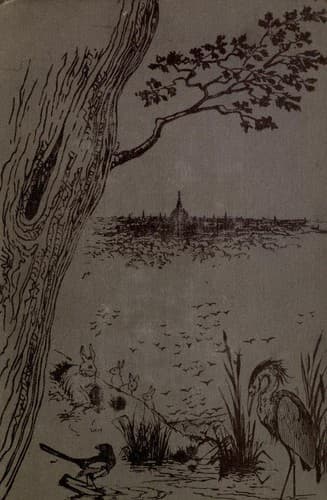
occasionally to watch from here a pair of herons, sailing over in their
calm serene way. Their flight was in the direction of the Thames, and
they then passed evening after evening, but the following summer they
did not come. One evening, later on in autumn, two birds appeared
descending across the cornfields towards a secluded hollow where there
was water, and, although at a considerable distance, from their manner
of flight I could have no doubt they were teal.
The spotted leaves of the arum appeared in the ditches in this locality
very nearly simultaneously with the first whistling of the blackbirds in
February; last spring the chiffchaff sang soon after the flowering of
the lesser celandine (not in this hedge, but near by), and the first
swift was noticed within a day or two of the opening of the May bloom.
Although not exactly, yet in a measure, the movements of plant and bird
life correspond.
Public-domain text, read in full here on John Shaqi.
Reviews
Reviews
No reviews yet
Be the first to share your thoughts on this work.
Join the Discussion
Join the discussion
Sign in to leave a comment or review.
Sign InorCreate an account