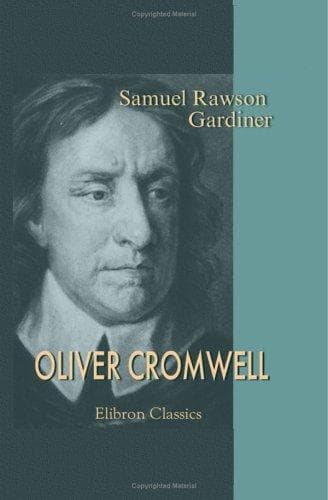
Cromwell, Oliver, 1599-1658; Great Britain -- History -- Commonwealth and Protectorate, 1649-1660
The conference had led to no decision, and during the first half
of 1652 Cromwell had enough to do in defending religious liberty
against those who had constituted themselves its champions. Before
the Battle of Worcester had been fought, Parliament had passed a
Blasphemy Act, for the punishment of atheistical, blasphemous and
execrable opinions. In the following February, the publication of a
Socinian catechism startled even the professed tolerationists. John
Owen, the foremost Independent minister of the day, now--owing to the
influence of Cromwell--Dean of Christchurch and Vice-Chancellor of the
University of Oxford, was almost certainly the author of a scheme of
ecclesiastical organisation presented by himself and twenty-six others
to the Committee for the Propagation of the Gospel. This scheme in
its main lines was subsequently adopted under the Protectorate. There
was to be an established Church, ministered to by orthodox persons
accepted by a body of triers, without regard to smaller points of
discipline, on condition that they presented a testimonial 'of their
piety and soundness of faith,' signed by six orthodox persons, and
these ministers upon proof of unfitness were liable to be removed
by a body of Ejectors. Other religious bodies were to be allowed to
meet for worship, but Unitarians and those opposing the principles of
Christianity were to be excluded from toleration. A list of fifteen
fundamental propositions which no one was to be permitted to deny was
set forth by Owen and his supporters. At this Cromwell took alarm.
"I had rather," he said, "that Mahometism were permitted amongst us
than that one of God's children be persecuted." The stand taken by him
secured the warm approval of Milton. "Cromwell," wrote the poet, whose
blindness had been hastened by his services to the State:
"Cromwell, our chief of men, who through a cloud
Not of war only, but detractions rude,
Guided by faith and matchless fortitude,
To peace and truth thy glorious way hast ploughed,
And on the neck of crowned Fortune proud
Hast reared God's trophies, and his work pursued,
While Darwen stream with blood of Scots imbrued,
And Dunbar field resound thy praises loud,
And Worcester's laureate wreath: yet much remains
To conquer still; Peace hath her victories
No less renowned than War: new foes arise
Threatening to bind our souls with secular chains,
Help us to save free conscience from the paw
Of hireling wolves, whose Gospel is their maw."
Public-domain text, read in full here on John Shaqi.
Reviews
Reviews
No reviews yet
Be the first to share your thoughts on this work.
Elsewhere in the archive
Join the Discussion
Join the discussion
Sign in to leave a comment or review.
Sign InorCreate an account