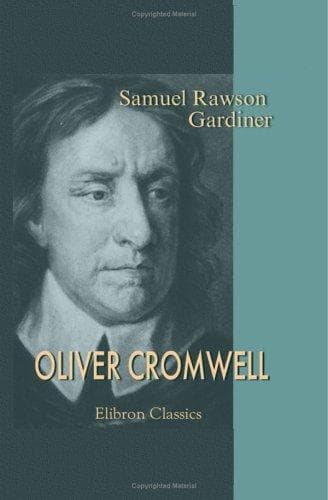
Cromwell, Oliver, 1599-1658; Great Britain -- History -- Commonwealth and Protectorate, 1649-1660
If only Parliament could have been induced to clear the way for its
successor on the terms proposed by the army, Cromwell would have been
the first to rejoice. In the early part of April he was still prepared
to stand by Parliament if it would proceed in earnest with the Bill for
the new elections. Yet on the 6th, one of the days appointed for its
consideration, the Bill was quietly passed over. By degrees it came
out that the Bill, when completed, would be one authorising Vane's
pet scheme of partial elections, the old members not only retaining
their seats but forming an election committee with power to exclude
any member whose presence was distasteful to them. There are even
reasons to believe that it was intended that this arrangement should be
a permanent one, and that each successive Parliament should have the
right of shedding such members as were not to its taste. Moreover, as
soon as the Bill was passed, Parliament was to adjourn till November,
that it might be out of its power to repeal or amend the act under
military pressure.
Such an arrangement must have irritated Cromwell to the uttermost. On
April 15, having been absent from Parliament for a month, he returned
to his place to plead against it. "It is high time," was the answer
vouchsafed by one of the leading personages to his pleading for a new
Parliament, "to choose a new general." Cromwell, in reply, offered
his resignation, but as no officer could be found to take his place,
the demand for it was soon dropped. Still anxious for a compromise,
he made a fresh proposal. Why should not the difficulty be got over
by a temporary suspension of the Parliamentary system, and a body of
right-thinking men appointed to take into consideration the necessities
of the time, and to prepare the way for its re-establishment. This
proposal was taken into consideration at a meeting of officers and
Parliamentarians on the 19th, but, as might have been expected, it
provoked opposition and, after a sitting prolonged far into the night,
the conference broke up on an undertaking given, as it would seem, by
Vane, that the members of the House who were present would do their
best to hinder the progress of the Bill on the following morning.
Public-domain text, read in full here on John Shaqi.
Reviews
Reviews
No reviews yet
Be the first to share your thoughts on this work.
Elsewhere in the archive
Join the Discussion
Join the discussion
Sign in to leave a comment or review.
Sign InorCreate an account