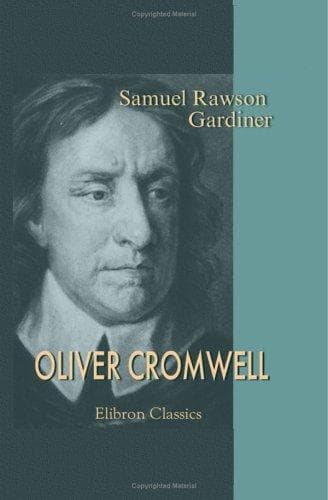
Cromwell, Oliver, 1599-1658; Great Britain -- History -- Commonwealth and Protectorate, 1649-1660
When the morning arrived, the House, taking the bit between its teeth,
threw aside the engagements of its leaders and insisted on proceeding
with the Bill. To the pecuniary interests of the Parliamentary rank
and file it was far more important to escape the necessity of facing
their constituents than it was to such men as Vane or Bradshaw, who
would almost certainly be re-elected in any case. Yet it has never been
alleged that either Vane or Bradshaw took steps to persuade the excited
House to act in conformity with the promise given the evening before.
Harrison at once despatched a message to Cromwell to warn him of the
danger, and Cromwell evidently regarded the action of the members as
a clear breach of faith on the part of Vane. Hurrying to the House,
without giving himself time to change the plain black clothes and the
grey worsted stockings which appear to have been considered unsuitable
to a member in his place in Parliament, he sat for a while in silence.
When the Speaker put the question that 'this Bill do pass,' he rose to
speak. Dwelling at first on the pains and care of the public good which
had characterised the early days of the Long Parliament, he proceeded
to blame the members for their later misconduct, holding up to scorn
'their injustice, delays of justice, self-interest, and other faults
... charging them not to have a heart to do anything for public good,'
and to have 'espoused the corrupt interest of Presbytery and lawyers
who were the supporters of tyranny and oppression'. Their last crime
was the present attempt to perpetuate themselves in power. "Perhaps,"
he continued, his wrath growing upon him as he spoke, "you think this
is not Parliamentary language. I confess it is not, neither are you to
expect any such from me." Then striding up and down the floor of the
House, he pointed to individual members, charging them with corruption
or immorality. "It is not fit," he added, "that you should sit as a
Parliament any longer. You have sat long enough, unless you had done
more good." Then, upon a remonstrance from Sir Peter Wentworth, he took
the final step. "Come, come!" he cried, "I will put an end to your
prating. You are no Parliament. I say you are no Parliament. I will
put an end to your sitting." Then turning to Harrison, he uttered the
fateful words, "Call them in; call them in". The door was thrown open
and thirty or forty musketeers tramped in. "This," exclaimed Vane, "is
not honest, yea it is against morality and common honesty." It was to
Vane's broken word that Cromwell, whether truly or falsely, attributed
the necessity of acting as he was now doing. Doubtless with a touch of
sadness in his voice, he addressed his old friend--his brother, as he
had long styled him--with the veiled reproof: "Oh, Sir Henry Vane! Sir
Henry Vane! The Lord deliver me from Sir Henry Vane!"
Public-domain text, read in full here on John Shaqi.
Reviews
Reviews
No reviews yet
Be the first to share your thoughts on this work.
Elsewhere in the archive
Join the Discussion
Join the discussion
Sign in to leave a comment or review.
Sign InorCreate an account