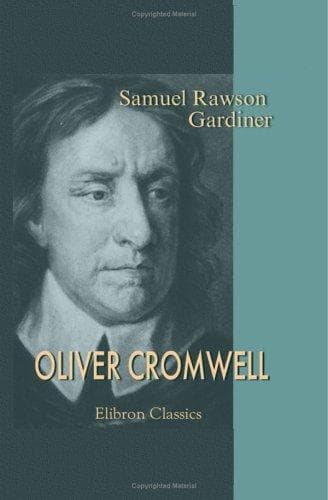
Cromwell, Oliver, 1599-1658; Great Britain -- History -- Commonwealth and Protectorate, 1649-1660
On July 4 the nominees of the army took their seats at Westminster.
Cromwell, at all events, threw himself entirely into the spirit of
the occasion. In a long speech he manifested his delight at seeing
the government at last entrusted to the hands of the godly. No such
authority, he proclaimed triumphantly, had ever before been entrusted
to men on the ground that they owned God and were owned by Him. For
once the emotional side of his nature had gained the upper hand over
his practical common-sense. In long detail he told of the misconduct
of the late Parliament, and repelled the idea that he had had any
intention of substituting his own authority for that of the discarded
House. It had been incumbent on him and his colleagues 'not to grasp
at the power ourselves, or to keep it in military hands, no, not for a
day, but, as far as God enabled us with strength and ability, to put
it into the hands of proper persons that might be called from the
several parts of the nation'. "This necessity," he proceeded to aver;
"and I hope we may say for ourselves, this integrity of concluding to
divest the sword of all power in the civil administrations, hath been
that that hath moved us to put you to this trouble." Then, enlarging
on the providential character of the mission of the members of the new
assembly, he urged them with many Scriptural quotations to take up
their authority as men whom God had placed as rulers of the land. What,
then, was to be said of that ideal of elected Parliaments, which had
sunk so deeply into the minds of that generation? "If it were a time,"
he suggested, "to compare your standing with those that have been
called by the suffrages of the people--which who can tell how soon God
may fit the people for such a thing? None can desire it more than I!
Would all were the Lord's people; as it was said, 'Would all the Lord's
people were prophets': I would all were fit to be called." In time,
indeed, this might be possible when the good and religious conduct of
this assembly had won the people to the love of godliness. "Is not this
the likeliest way to bring them to their liberties?" Finally, after
much enforcement of the encouragements held forth by the Prophets and
the Psalmists, he resigned all the power provisionally exercised by
himself into the hands of his hearers, announcing to them that their
power also was to be provisional. They were to hold it only till
November 3, 1654, and then to give place to a second assembly to be
elected by themselves--an assembly which was to sit for no more than a
year, in which time it was to make provision for the future government
of the country.
Public-domain text, read in full here on John Shaqi.
Reviews
Reviews
No reviews yet
Be the first to share your thoughts on this work.
Elsewhere in the archive
Join the Discussion
Join the discussion
Sign in to leave a comment or review.
Sign InorCreate an account