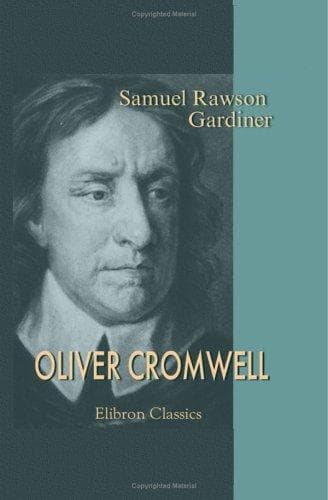
Cromwell, Oliver, 1599-1658; Great Britain -- History -- Commonwealth and Protectorate, 1649-1660
Cromwell's position was rendered difficult by his association with
this ill-starred assembly. On September 14 a broadside was scattered
in the streets charging him with treason to 'his Lords the people of
England,' not because he had broken up the miserable remnant of the
Long Parliament, but because he had stood in the way of the election of
a new House, and it is highly probable that a large number of people
who had nothing to do with the distribution of broadsides shared in
this opinion. Still greater was the danger of an appeal to the army,
with which the writers concluded. It was known that many of the
soldiers, and even of the officers, were restive under the suspension
of popular elections, and it was found necessary to secure submission
by cashiering Lieutenant-Colonel Joyce, who had formerly, as a cornet,
carried off the King from Holmby House, and who now threw himself on
the side of those who cried out for constitutional rights.
On the subject of Church organisation, Parliament was as subversive
as on the subject of law reform, many of its members held with the
Fifth Monarchy preachers, that the government of the State ought to be
exclusively in the hands of the Saints, and, not unnaturally, concluded
that they were themselves the Saints; thus taking a broad issue in
defiance of the theory that the government ought to be administered or
controlled by the elected representatives of the nation. The immediate
dispute, however, turned on the unwillingness of the advanced party to
continue any sort of endowment of the clergy. Cromwell, it is true,
on more than one occasion had expressed himself strongly against the
existing tithe system and would have been perfectly ready to concur
in any plan for the removal of its abuses, or for substituting for
it--as had been suggested in _The Agreement of the People_ presented
by the army--a more equitable mode of raising the money needed by the
clergy. Further than that he was not likely to go, and matters were
brought to a crisis by a resolution passed on November 17 for the
abolition of patronage, and still more by the decision of the House on
December 10--though only by a majority of two--to reject a scheme of
Church-government founded in the main on the lines drawn by Owen, in
which the payment of tithes was taken as a financial basis.
Public-domain text, read in full here on John Shaqi.
Reviews
Reviews
No reviews yet
Be the first to share your thoughts on this work.
Elsewhere in the archive
Join the Discussion
Join the discussion
Sign in to leave a comment or review.
Sign InorCreate an account