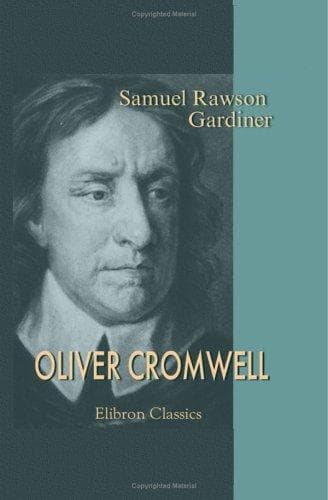
Cromwell, Oliver, 1599-1658; Great Britain -- History -- Commonwealth and Protectorate, 1649-1660
What we are here concerned with, however, is not the details of
Oliver's foreign policy, but its conception as a whole. It is true
that the existing position of affairs in Europe,--in which France and
Spain were neutralising the forces of one another--was almost an
invitation to the strong military and naval power of the Protectorate
to extend its influence at the expense of one or other of the rivals;
but, so far as this consideration may have played its part in
bringing Oliver to a decision, it has left no traces in his recorded
words. Obviously, when he undertook the negotiation with the Dutch,
he had two courses before him, either to lay the foundations of a
general peace, or to leave himself free to push military and naval
enterprises in other directions. It was the latter course on which he
resolved--a course which has gained him the admiration of a posterity
prompt to recognise in Oliver the ruler who, having received from the
Commonwealth an excellently organised army and navy, was the first
to apply those potent instruments of conquest to the acquisition
of over-sea dominion. What posterity has failed to observe is that
this design was incompatible with his other design of settling the
government of England on a constitutional basis. By his resolve to
seek military employment for the magnificent force that he had welded
together, and to find reasons for going to war with some nation or
other, rather than be driven into war by the necessity of upholding
the honour and interests of the country, Oliver was compelled to keep
up a military and naval establishment which may not have been in
excess of the taxable capacity of the nation; but which at all events
imposed a burden much heavier than that to which Englishmen had been
accustomed to submit. Before Parliament met, after many hesitations he
had resolved to send out one fleet under Blake into the Mediterranean
to enforce the release of English prisoners taken by the pirates of the
Barbary coast, and another fleet under Penn to seize upon Hispaniola or
some other West Indian island as a response to the refusal of Spain to
allow English merchantmen to trade even with English colonies in the
West Indies, as well as to various acts of violence already committed
by Spanish officials in American waters.
Public-domain text, read in full here on John Shaqi.
Reviews
Reviews
No reviews yet
Be the first to share your thoughts on this work.
Elsewhere in the archive
Join the Discussion
Join the discussion
Sign in to leave a comment or review.
Sign InorCreate an account