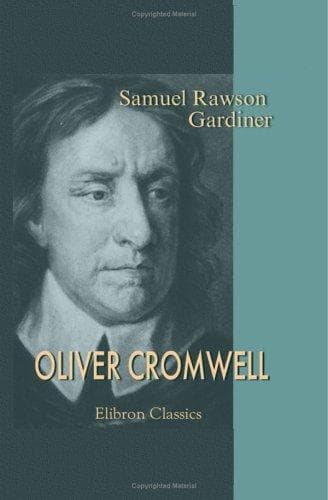
Cromwell, Oliver, 1599-1658; Great Britain -- History -- Commonwealth and Protectorate, 1649-1660
That in both these cases Oliver was justified in seeking redress can
hardly be denied. As regards Spain, he had already made a twofold
demand on Cardenas, the Spanish ambassador, first, for liberty of trade
in the Indies--not necessarily, so far as our information goes, for
liberty of trade with Spanish possessions--and, secondly, for entire
liberty of religion for English merchants and sailors in their own
houses on Spanish soil and in their ships in Spanish ports--he not
being satisfied with the offer of Spain to renew the stipulations of
the treaty signed by Charles I., in which the Inquisition was debarred
from acting against English Protestants so long as they created
no scandal. Both demands were promptly rejected. "It is," replied
Cardenas, "to ask my master's two eyes." Oliver's notion that he could
attack a Spanish colony in the West Indies and yet remain at peace
with Spain can only be explained by his admiration for Elizabethan
methods, which led him to suppose that the existing Spanish Government
would be as ready as that of Philip II. to put up with a system which
kept peace in Europe whilst war was being waged in America. It is not,
however, with problems of international morality that we are at present
concerned. Before Blake could sail for the Mediterranean or Penn for
the West Indies, Parliament would meet, and would be confronted with
the fact that, in addition to his fleets, the Protector had on foot a
land force of 57,000 men, a number exceeding by no less than 27,000
the 30,000 which the Instrument itself had laid down as the normal
strength of the army. It is true that he could hardly have met his
engagements with a smaller force. Ireland was only recently subdued;
an insurrection against the English conquerors--known as Glencairn's
rising--was in full swing in Scotland; the dread of a Royalist movement
in England required the maintenance of more troops than would be
needed in quieter times, whilst other regiments were already preparing
for embarkation in the West Indian fleet. On the other hand, when
it is remembered that it was through his command of the services of
these soldiers that Oliver had been raised to power, that he could
still count on their support to maintain him in it, and that he was
calling upon the nation to bear the burden of enterprises which he had
originated without asking its consent, can it be matter of wonder that
at such a time there should be some effort on the part of a Parliament
which had come to look upon itself as representing the nation to
impose limits upon the burdens which had already far outgrown even the
prescriptions of the Instrument itself?
Public-domain text, read in full here on John Shaqi.
Reviews
Reviews
No reviews yet
Be the first to share your thoughts on this work.
Elsewhere in the archive
Join the Discussion
Join the discussion
Sign in to leave a comment or review.
Sign InorCreate an account