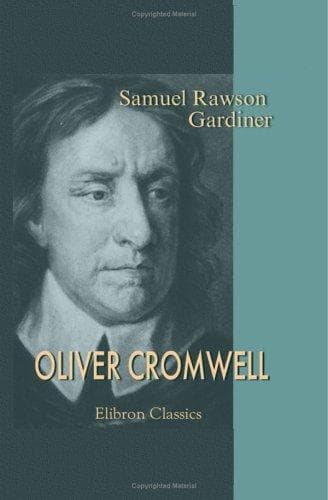
Cromwell, Oliver, 1599-1658; Great Britain -- History -- Commonwealth and Protectorate, 1649-1660
The elections to the first Protectorate Parliament were held under
peculiar conditions. In the boroughs still permitted to return
members the old conditions existed, but in the counties to which a
redistribution of seats had transferred the electoral power, hitherto
possessed by small villages under the influence of the neighbouring
landowners, the Instrument had established a uniform franchise of the
ownership of real or personal property worth £200. So far as we can
trace any direct issue before the constituencies, the elections turned
on the approval or renunciation of the policy of the advanced party in
the nominated Parliament, and on this the electorate gave no uncertain
sound. That party was practically swept away, and a full approbation
thereby accorded to the conservative policy which had been the main
strength of the appeal made to the country by the new government. It
did not follow that the new constitution would meet with the same
approbation. A not inconsiderable number of the Commonwealth men, such
as Bradshaw and Hazlerigg, sore at their expulsion from the benches of
the Long Parliament, had been returned, together with a goodly company
of political Presbyterians, who might be expected to do their best to
free Parliament from the shackles of the Instrument.
Under these circumstances, Oliver's speech at the opening of Parliament
was a masterpiece of skill. Dwelling on the points on which he and the
majority of his hearers were in agreement, he kept out of sight those
on which differences might arise. He called for healing and settlement,
for orderly government which might replace the confusions of the past
and stem the tide of fanaticism in the present. He dwelt not on the
extent of the liberty of conscience proclaimed in the Instrument,
but on the restrictions imposed in that document, especially on such
teachers as 'under the profession of Christ, hold forth and practise
licentiousness'. He held up for acceptance the doctrine that, when
such a result was to be feared, it was the duty of the magistrate to
intervene. He protested against the notion that it was antichristian
for a minister to receive ordination, and also against the notion
that the Fifth Monarchy was about to commence, and that it was 'for
men, on this principle, to betitle themselves that they are the only
men to rule kingdoms, govern nations, and give laws to people, and
determine of property and liberty and everything else'. Then came
Oliver's appeal for support on the grounds of the difficulties he had
inherited from his predecessors--troubles in Ireland and Scotland,
trade with Portugal and France interrupted, as well as a war with the
Dutch; after which he set forth the benefits of the Instrument, the
legal and ecclesiastical reforms it had rendered possible, the peace
with the Dutch, and the commercial treaties concluded with Sweden and
Denmark. Finally came a hint that Parliament might well be liberal
Public-domain text, read in full here on John Shaqi.
Reviews
Reviews
No reviews yet
Be the first to share your thoughts on this work.
Elsewhere in the archive
Join the Discussion
Join the discussion
Sign in to leave a comment or review.
Sign InorCreate an account