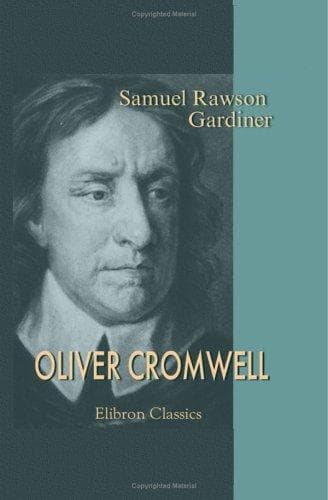
Cromwell, Oliver, 1599-1658; Great Britain -- History -- Commonwealth and Protectorate, 1649-1660
There was in Cromwell's mind a capacity for recognising the strength of
adverse facts which had led him--there is some reason to believe[B]--to
think of emigrating to America in 1636 when Charles's triumph appeared
most assured, and which now led him to think of the same mode of escape
to a purer atmosphere if Charles, supported by Parliament, should
be once more in the ascendant. On neither of the two occasions did
his half-formed resolution develop into a settled purpose, the first
time because, for some unknown reason, he hardened his heart to hold
out till better times arrived; the second time because the danger
anticipated never actually occurred.
[B] See the argument for the probability of the traditional
story, though the details usually given cannot be true,
in Mr. Firth's _Oliver Cromwell_, 37.
In the constitutional by-play which followed--the question of the
Bishops' protest and the resistance to the attempt on the five
members--Cromwell took no prominent part, though his motion for an
address to the King, asking him to remove the Earl of Bristol from
his counsels on the ground that he had formerly recommended Charles
to bring up the Northern army to his support, shows in what direction
his thoughts were moving. The dispute between Parliament and King
had so deepened that each side deprecated the employment of force by
the other, whilst each side felt itself justified in arming itself
ostensibly for its own defence. It was no longer a question of
conformity to the constitution in the shape in which the Tudors had
handed it down to the Stuarts. That constitution, resting as it did on
an implied harmony between King and people, had hopelessly broken down
when Charles had for eleven years ruled without a Parliament. The only
question was how it was to be reconstructed. Cromwell was not the man
to indulge in constitutional speculations, but he saw distinctly that
if religion--such as he conceived it--was to be protected, it must be
by armed force. A King to whom religion in that form was detestable,
and who was eager to stifle it by calling in troops from any foreign
country which could be induced to come to his aid, was no longer to be
trusted with power.
Public-domain text, read in full here on John Shaqi.
Reviews
Reviews
No reviews yet
Be the first to share your thoughts on this work.
Join the Discussion
Join the discussion
Sign in to leave a comment or review.
Sign InorCreate an account