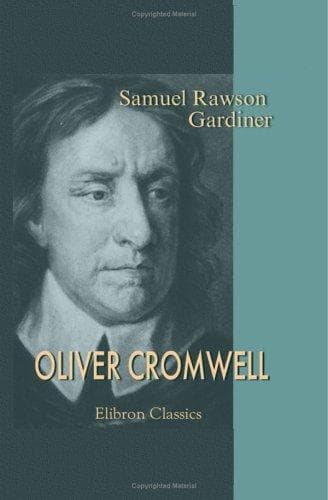
Cromwell, Oliver, 1599-1658; Great Britain -- History -- Commonwealth and Protectorate, 1649-1660
So far as we know, Cromwell did not intervene in the debates on the
control of the militia. He was mainly concerned with seeing that the
militia was in a state of efficiency for the defence of Parliament. As
early as January 14, 1642, soon after the attempt on the five members
had openly revealed Charles's hostility, it was on Cromwell's motion
that a committee was named to put the kingdom in a posture of defence,
and this motion he followed up by others, with the practical object
of forwarding repression in Ireland or protection to the Houses at
Westminster. Though he was far from being a wealthy man, he contributed
£600 to the projected campaign in Ireland, and another £500 to the
raising of forces in England. Mainly through his efforts, Cambridge
was placed in a state to defend itself against attack. Without waiting
for a Parliamentary vote, he sent down arms valued at £100. On July 15
he moved for an order 'to allow the townsmen of Cambridge to raise two
companies of volunteers, and to appoint captains over them'. A month
later the House was informed that 'Mr. Cromwell, in Cambridgeshire,
hath seized the magazine in the castle at Cambridge,' that is to say,
the store of arms--the property of the County--ready to be served out
to the militia when called upon for service or training, 'and hath
hindered the carrying of the plate from that University; which, as was
reported, was to the value of £20,000 or thereabouts'. Evidently there
was one member of Parliament prompt of decision and determined in will,
who had what so few--if any--of his colleagues had--the makings of a
great soldier in him.
Public-domain text, read in full here on John Shaqi.
Reviews
Reviews
No reviews yet
Be the first to share your thoughts on this work.
Join the Discussion
Join the discussion
Sign in to leave a comment or review.
Sign InorCreate an account