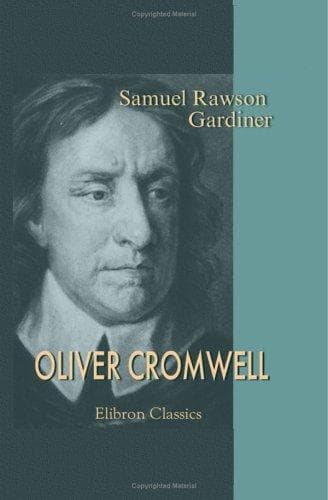
Cromwell, Oliver, 1599-1658; Great Britain -- History -- Commonwealth and Protectorate, 1649-1660
When at last Essex received the command to create a Parliamentary army,
Cromwell accepted a commission to raise a troop of arquebusiers--the
light horse of the day--in his own county. He can have had no
difficulty in finding recruits, especially as his popularity in the
fen-land had been, if possible, increased by his conduct in a committee
held in the preceding summer, where he bitterly resented an attempt
of the Earl of Manchester to enclose lands in defiance of the rights
of the commoners. He was, however, resolved to pick the sixty men he
needed. We can well understand that in choosing his subordinates he
would be inspired by an instinctive desire to prize those qualities
in his soldiers which were strongly developed in his own character,
in which strenuous activity was upheld by unswerving conviction and
perfervid spiritual emotion. He could choose the better because
he had neighbours, friends and kinsmen from whom to select. The
Quarter-master of his troop was John Desborough, his brother-in-law,
whilst another brother-in-law, Valentine Wauton, though not actually
serving under Cromwell, rallied to his side, and became the captain
of another troop in the Parliamentary army. To the end of his career
Cromwell never forwarded the prospects of a kinsman or friend unless
he was persuaded of his efficiency, though he never shrank from the
promotion of kinsmen whom he believed himself able to trust in order to
shake off the charge of nepotism from himself.
The sobriety of Cromwell's judgment was as fully vindicated by his
choice of the cavalry arm for himself, as by the selection of his
subordinates. If the result of the coming war was to be decided by
superiority in cavalry, as would certainly be the case, the chances
were all in favour of the Royalist gentry, whose very nickname of
'cavaliers' was a presage of victory, and who were not only themselves
familiar with horsemanship from their youth up, but had at their
disposal the grooms and the huntsmen who were attached to their
service. "Your troops," he said some weeks later to his cousin Hampden,
after the failure of the Parliamentary horse had become manifest,
"are most of them old decayed serving men and tapsters, and such kind
of fellows; and their troops are gentlemen's sons and persons of
quality. Do you think the spirits of such base and mean fellows will
ever be able to encounter gentlemen that have honour and courage and
resolution in them?... You must get men of spirit, and, take it not
ill what I say--I know you will not--of a spirit that is likely to go
on as far as gentlemen will go, or else you will be beaten still." The
importance of a good cavalry was in those days relatively much greater
than it is now. A body of infantry composed in about equal proportions
of pikemen and musketeers, the latter armed with a heavy and unwieldy
weapon, only to be fired at considerable intervals, and requiring the
support of a rest to steady it, needed to be placed behind hedges to
Public-domain text, read in full here on John Shaqi.
Reviews
Reviews
No reviews yet
Be the first to share your thoughts on this work.
Join the Discussion
Join the discussion
Sign in to leave a comment or review.
Sign InorCreate an account