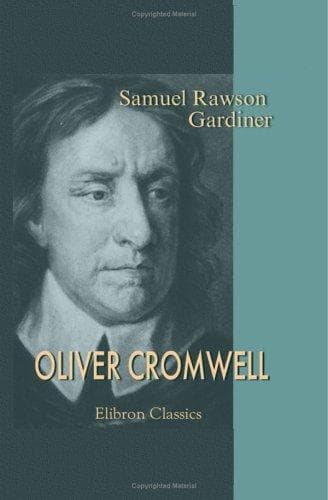
Cromwell, Oliver, 1599-1658; Great Britain -- History -- Commonwealth and Protectorate, 1649-1660
Many months were to pass away before Cromwell was to measure swords
with Rupert. He remained under Essex almost to the end of the year, and
was present at Turnham Green, when Essex saw Charles, after taking up a
position at Brentford in the hope of forcing a passage to London, march
off to Reading and Oxford without attempting to strike a blow. Towards
the end of 1642, or in the early part of 1643, Cromwell had work
found for him which was eventually to breathe a new spirit into the
Parliamentary army. Enormous as was the advantage which the devotion
of London conferred upon Parliament, London by no means exercised that
supreme influence which was exercised by Paris in the times of the
French Revolution. Both parties, therefore, put forth their efforts
in organising local forces, but of all the local organisations which
were brought into existence, the only one entirely successful was the
Eastern Association, comprising Essex, Suffolk, Norfolk, Cambridge
and Herts, and that mainly because Cromwell was at hand to keep it
up to the mark. There was to be a general fund at the service of the
association, whilst the forces raised in the several shires of which it
was composed were to be at the disposal of a common committee.
In England generally the first half of 1643 was a time of desultory
fighting, alternating with efforts to make peace without the conditions
which might have brought peace within sight. It was not to be expected
either that Parliament would accept Charles on his own terms, or that
Charles would bow down to any terms which Parliament was likely to
offer. Cromwell, at least, took no part in these futile negotiations,
and did all that in him lay to clear the counties of the Eastern
Association from Royalists, and to put them in a state of defence
against Royalist incursions. At some time later than January 23, and
before the end of February, he was promoted to a colonelcy. In March he
was fortifying Cambridge, and urgently pleading for contributions to
enable him to complete the work. Again we find him sending to arrest
a Royalist sheriff who attempted to collect soldiers at St. Alban's,
and then hurrying to Lowestoft to crush a Royalist movement in the
town. After this no more is heard of Royalism holding up its head in
any corner of the association, and to the end of the war no Royalist
in arms again set foot within it. By the end of May it was joined by
Huntingdonshire, the county of Cromwell's birth.
Public-domain text, read in full here on John Shaqi.
Reviews
Reviews
No reviews yet
Be the first to share your thoughts on this work.
Join the Discussion
Join the discussion
Sign in to leave a comment or review.
Sign InorCreate an account