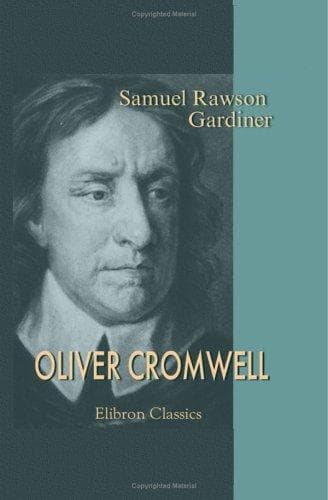
Cromwell, Oliver, 1599-1658; Great Britain -- History -- Commonwealth and Protectorate, 1649-1660
Cromwell's superabundant energy was employed in other ways than in
contending against armed men. Laud's enforcement of at least external
signs of respect to objects consecrated to religious usage had provoked
a reaction which influenced Puritanism on its least noble side. A
certain Dowsing has left a diary, showing how he visited the Suffolk
churches, pulling down crosses, destroying pictures and tearing up
brasses inscribed with _Orate pro animâ_, the usual expression of
mediæval piety towards the dead. At Cambridge, Cromwell himself,
finding opposition amongst those in authority in the University, sent
up three of the Heads of Houses in custody to Westminster, and on a
cold night in March shut up the Vice-Chancellor and other dignitaries
in the public schools till midnight without food or firing, because
they refused to pay taxes imposed by Parliament.
Nor was it only with open enemies that Cromwell and those who
sympathised with him had to deal. Of all forms of war civil strife is
the most hideous, and it is no wonder that the hands of many who had
entered upon it with the expectation that a few months or even weeks
would suffice to crush the King were now slackened. Was it not better,
they asked, to come to terms with Charles than to continue a struggle
which promised to drag out for years? Negotiations opened at Oxford
in the spring failed, indeed, to lead to peace, because neither party
had the spirit of compromise, but they were accompanied or followed by
the defection from the Parliamentary ranks of men who, at the outset,
had stood up manfully against the King, such as Sir Hugh Cholmley,
who hoisted the royal colours over Scarborough Castle, which had been
entrusted to him by the Houses; and the Hothams, father and son, who,
whilst nominally continuing to serve the Parliament, were watching for
an opportunity of profitable desertion. Such tendencies were encouraged
by the vigour with which the King's armies were handled, and the
successes they gained in the early summer. On May 16 the Parliamentary
General, the Earl of Stamford, was defeated at Stratton, with the
result that Sir Ralph Hopton was able to overrun the Western counties
at the head of the Royalist troops, and though defeated on Lansdown by
Sir William Waller, was succoured by a Royalist army which, on July 13,
crushed Waller's army on Roundway Down; whilst on July 26 Bristol was
taken by Rupert, and the whole of the Southern counties thrown open
to the assaults of the King's partisans. Farther east, though Essex
succeeded in capturing Reading, his army melted away before disease
and mismanagement. On June 18 Hampden was mortally wounded at Chalgrove
Field. Lord Fairfax and his son, Sir Thomas Fairfax, were with
difficulty holding their own in the West Riding of Yorkshire against
a Royalist force under the command of the Earl of Newcastle. By the
middle of the year, the Parliamentary armies were threatened with ruin
on almost every side.
Public-domain text, read in full here on John Shaqi.
Reviews
Reviews
No reviews yet
Be the first to share your thoughts on this work.
Join the Discussion
Join the discussion
Sign in to leave a comment or review.
Sign InorCreate an account