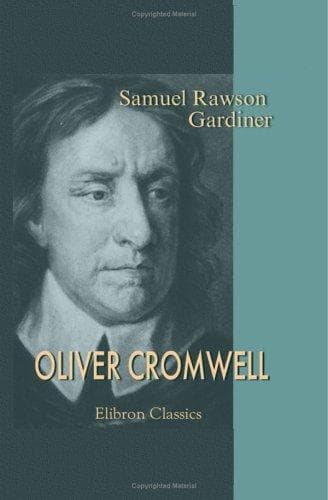
Cromwell, Oliver, 1599-1658; Great Britain -- History -- Commonwealth and Protectorate, 1649-1660
Manchester's reluctance to engage in military operations was probably
strengthened by the knowledge that Vane, who, since Pym's death in
the winter of 1643, was the most prominent personage amongst the war
party at Westminster, had come down to York, at the time of the siege,
to urge the generals, though in vain, to consent to the deposition of
the King, and he could not but suspect that the arrival of Charles
Louis, Elector Palatine, the eldest surviving son of Charles's sister
Elizabeth, on August 30, had something to do with a design for placing
him on his uncle's throne. The design, if it really existed, came
to nothing, probably because it was hopeless to carry it out in the
teeth of the generals. It was only with the utmost difficulty that
Manchester's hesitation was overcome, and that he was induced to face
Charles's army at Newbury. The battle fought there on October 27 was a
drawn one. That it did not end in a Parliamentary victory was mainly
owing to Manchester's indecision. When, a few days later, the King
reappeared on the scene, he was allowed to relieve Donnington Castle,
in the immediate neighbourhood of Newbury, no attempt whatever being
made to hinder his operations. In the controversy which followed,
Manchester went to the root of the matter when he said, "If we beat
the King ninety and nine times, yet he is King still, and so will
his posterity be after him; but if the King beat us once we shall
all be hanged, and our posterity made slaves". "My Lord," answered
Cromwell, "if this be so why did we take up arms at first? This is
against fighting ever hereafter. If so, let us make peace, be it never
so base." Each of the two men had fixed upon one side of the problem
which England was called upon to solve. Manchester was appalled by the
political difficulty. There stood the Kingship accepted by generation
after generation, fenced about with safeguards of law and custom, and
likely to be accepted in one form or another by generations to come. A
single decisive victory gained by Charles would not only expose those
who had dared to make war on him to the hideous penalties of the law of
treason--but would enable him to measure the terms of submission by his
own resolves. If Manchester had had the power of looking into futurity,
he would have argued that no military success--not even the abolition
of monarchy, and the execution of the monarch--would avail to postpone
the restoration of Charles's heir for more than a little while.
Public-domain text, read in full here on John Shaqi.
Reviews
Reviews
No reviews yet
Be the first to share your thoughts on this work.
Join the Discussion
Join the discussion
Sign in to leave a comment or review.
Sign InorCreate an account