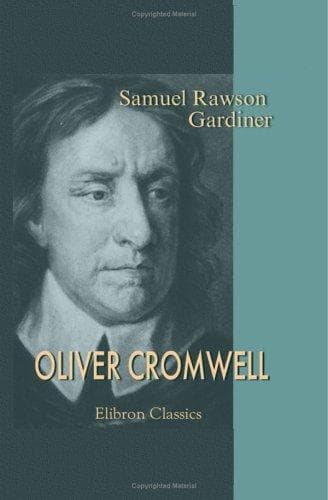
Cromwell, Oliver, 1599-1658; Great Britain -- History -- Commonwealth and Protectorate, 1649-1660
On November 25 Cromwell appeared in Parliament to urge on the one
thing immediately necessary, the forging of an instrument by which
the King might be ruined in the field. The existing military system
by which separate armies, to a great extent composed of local forces,
and therefore unable to subordinate local to national objects, had
been placed under commanders selected for their political or social
eminence, had completely broken down. So well was this recognised that,
two days before Cromwell's arrival at Westminster, a committee had
been appointed without opposition to 'consider of a frame or model of
the whole militia'. It was perhaps to assist the committee to come to
a right conclusion that, upon his arrival at Westminster, Cromwell
indignantly assailed Manchester as guilty of all the errors which had
led to the deplorable result at Newbury. Manchester was not slow in
throwing all the blame on Cromwell, and it seemed as if the gravest
political questions were to be thrust aside by a personal altercation.
So angry were the Scottish members of the Committee of both kingdoms,
a body which had recently been appointed to direct the movements of
the armies, that they won over the Presbyterian leaders, Essex and
Holles, to look favourably on a scheme for bringing an accusation
against Cromwell as an incendiary who was doing his best to divide
the King from his people, and one of the kingdoms from the other. At
a meeting held at Essex House the Scottish Earl of Loudoun asked the
English lawyers present whether an incendiary who was punishable by the
law of Scotland was also punishable by the law of England. The English
lawyers threw cold water on the scheme, Whitelocke asking to see the
evidence on which the charge was founded, whilst Maynard declared that
'Lieutenant-General Cromwell is a person of great favour and interest
with the House of Commons, and with some of the Peers likewise,
and therefore there must be proofs, and the most clear and evident
against him, to prevail with the Parliament to adjudge him to be an
incendiary'. Neither Whitelocke nor Maynard was eager to bell the cat.
Public-domain text, read in full here on John Shaqi.
Reviews
Reviews
No reviews yet
Be the first to share your thoughts on this work.
Join the Discussion
Join the discussion
Sign in to leave a comment or review.
Sign InorCreate an account