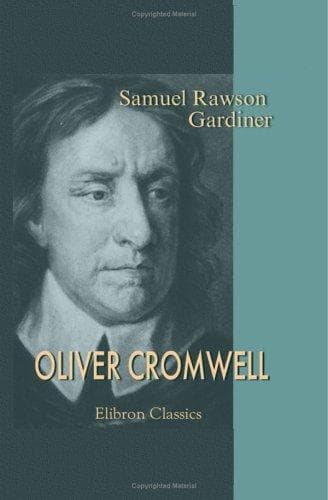
Cromwell, Oliver, 1599-1658; Great Britain -- History -- Commonwealth and Protectorate, 1649-1660
backed as they would be by the most energetic of the private soldiers.
Nor was Baxter longer in discovering that the military preachers
were ready to question received doctrine in politics as well as in
religion. "I perceived," he declared, "they took the King for a tyrant
and an enemy, and really intended to master him, and they thought if
they might fight against him they might kill or conquer him, and if
they might conquer they were never more to trust him further than he
was in their power; and that they thought it folly to irritate him
either by wars or contradictions in Parliament, if so be they must
needs take him for their King, and trust him with their lives when
they had thus displeased him." These audacious reasoners went further
still. "What," they asked, "were the Lords of England but William the
Conqueror's colonels, or the Barons but his majors, or the Knights
but his captains?" "They plainly showed me," complained Baxter, "that
they thought God's providence would cast the trust of religion and the
Kingdom upon them as conquerors; they made nothing of all the most wise
and godly in the armies and garrisons that were not of their way. _Per
fas aut nefas_, by law or without it, they were resolved to take down
not only Bishops and liturgy and ceremonies, but all that did withstand
their way. They ... most honoured the Separatists, Anabaptists and
Antinomians; but Cromwell and his council took on them to join
themselves to no party, but to be for the liberty of all."
'To be for the liberty of all' was recognised as being Cromwell's
position. There is every reason to suppose that he had at this time
little sympathy with the aspirations of those who would have made
the army the lever wherewith to obtain political results otherwise
unobtainable. In his Bristol despatch he had pointedly adhered to
the doctrine that the sword had been placed by God in the hands of
Parliament, and for the present he was inclined to look to Parliament
alone for the boon he asked of it. What makes Cromwell's biography
so interesting is his perpetual effort to walk in the paths of
legality--an effort always frustrated by the necessities of the
situation.
Public-domain text, read in full here on John Shaqi.
Reviews
Reviews
No reviews yet
Be the first to share your thoughts on this work.
Join the Discussion
Join the discussion
Sign in to leave a comment or review.
Sign InorCreate an account