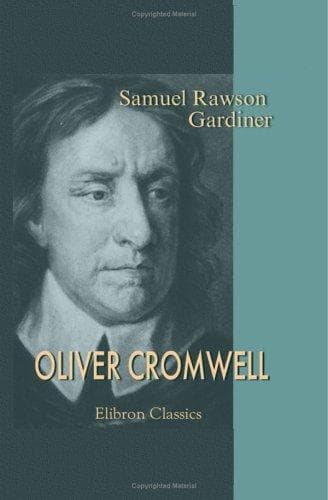
Cromwell, Oliver, 1599-1658; Great Britain -- History -- Commonwealth and Protectorate, 1649-1660
It is difficult for us, nursled as we are under a regime of religious
liberty, to understand how hateful Cromwell's proposal was in the eyes
of the vast majority of his contemporaries. Not only did it shock those
who looked down with scorn on the vagaries of the tub-preacher, but
it aroused fears lest religious sectarianism should, by splitting up
the nation into hostile parties, lead the way to political weakness.
To every nation it is needful that there be some bond of common
emotion which shall enable it to present an undivided front against
its enemies, and such a bond was more than ever needful at a time when
loyalty to the throne had been suspended. It was Cromwell's merit to
have seen that this bond would be strengthened, not weakened, by the
permission of divergencies in teaching and practice, so long as there
was agreement on the main grounds of spiritual Puritanism. If on the
one hand he was behind Roger Williams in theoretical conception, he
was in advance of him in his attempt to fit in his doctrines with the
practical needs of his time.
Some assistance Cromwell had from men with whom, on other grounds, he
had little sympathy. The Westminster Assembly of divines, which had
been sitting since 1643, had done its best to impose the Presbyterian
system on England, but in the House of Commons there was a small
group of Erastian lawyers, with the learned Selden at their head,
which was strong enough to carry Parliament with it in resistance
to the imposition upon England of a Scottish Presbyterianism--that
is to say, of an ecclesiastical system in which matters of religion
were to be disposed of in the Church Courts without any appeal to
the lay element in the State; though, on the other hand, it must not
be forgotten that in those very Church Courts the lay element found
its place. The Erastians, however, preferred to uphold the supreme
authority of the laity represented in Parliament--as the lawyers of the
preceding century had upheld the authority of the laity represented
in the King--probably because they knew that the lay members of the
Presbyterian assemblies were pretty sure to fall under the influence
of the clergy. Selden indeed was no admirer of the enthusiasms of the
sects; but his cool, dispassionate way of treating their claims would,
in the end, make for liberty even more certainly than the burning zeal
of a Williams or a Cromwell.
Public-domain text, read in full here on John Shaqi.
Reviews
Reviews
No reviews yet
Be the first to share your thoughts on this work.
Join the Discussion
Join the discussion
Sign in to leave a comment or review.
Sign InorCreate an account