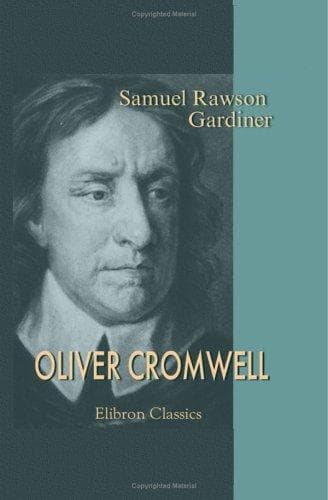
Cromwell, Oliver, 1599-1658; Great Britain -- History -- Commonwealth and Protectorate, 1649-1660
There is no reason to doubt that Cromwell sympathised with the soldiers
in their desire for a just settlement of their claims, whilst he was
still disinclined to support them in their design of gaining influence
over the Government. When he reached Saffron Walden he found that the
infantry regiments had followed the example of the cavalry, and that
a body of Agitators had been chosen to represent the whole army. The
result of their conferences with the officers was the production of
_A Declaration of the Army_, drawn up on May 16, with which Cromwell
appears to have been entirely satisfied, as, while it insisted on a
redress of practical grievances, it contained no claim to political
influence. If the Houses had frankly accepted the situation, Cromwell
and his colleagues would have succeeded in averting, at least for a
time, the danger of investing the army with political power.
On his return Cromwell found signs that the Parliamentary majority was
even less inclined to do justice to the soldiers than when he had left
Westminster. During his absence, Parliamentary authority to discipline
and train the militia of the City had been given to a committee named
by the Common Council of London. The Common Council was a Presbyterian
body, and its committee proceeded to eject every officer tainted with
Independency. The city militia numbered 18,000 men, and it looked as
if the majority in Parliament was preparing a force which might be
the nucleus of an army to be opposed to the soldiers of Fairfax and
Cromwell. In Scotland, too, there was an army of more than 6,000 men,
under the command of David Leslie--no inconsiderable general--which
might perhaps be brought to the help of the Parliament against its own
soldiers, as Leven's army had, three years before, been brought to its
assistance against the King. Charles, too, on May 12--Cromwell being
still absent from Westminster--had at last replied to the proposals
made to him early in the year, and had offered to concede the militia
for ten years, and a Presbyterian establishment for three, the clergy
being allowed to discuss in the meanwhile the terms of a permanent
settlement. In the very probable event of their disagreeing, it would
be easy for Charles, at the end of the three years, to contend that
episcopacy was again the legal government of the Church--especially
as he was at once to return to Westminster, where he would be able to
exercise all the influence which would again be at his command. On
May 18 this offer was however accepted by the English Presbyterians,
as well as by the Scottish Commissioners, as a fair basis of an
understanding with the King. No wonder that the soldiers took alarm, or
that on the 19th the Agitators issued an appeal to the whole army to
hang together in resistance.
Public-domain text, read in full here on John Shaqi.
Reviews
Reviews
No reviews yet
Be the first to share your thoughts on this work.
Join the Discussion
Join the discussion
Sign in to leave a comment or review.
Sign InorCreate an account