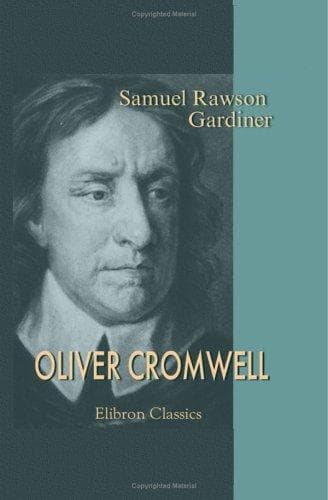
Cromwell, Oliver, 1599-1658; Great Britain -- History -- Commonwealth and Protectorate, 1649-1660
Already Cromwell's apparent devotion to the King's person was not
unnaturally drawing forth harsh criticisms from those who failed to
understand the essential unity underlying divergencies in his action.
Some at least amongst the Agitators were joining the Presbyterians
in sarcasms directed against the man who was everything by turns;
who had at one time taken the Covenant--at another time accepted the
disbandment of the army; at another time again had made himself the
instrument of the army in its resistance of disbandment. Cromwell took
no notice of such calumnies. He was more concerned with the eagerness
of the Agitators to march upon Westminster with the object of forcing
the Houses to condemn the eleven members who were again stirring,
and of crushing the discontent which was simmering amongst the City
population. Happily the mere threat of force had been sufficient, and
Parliament virtually abandoned its hostile attitude by naming Fairfax
Commander-in-chief of all the forces in the country. Would it be so
easy to deal with Charles? By July 23, _The Heads of the Proposals_,
probably drawn up by Ireton--who, of all the officers, was the most
versed in constitutional lore--with the assistance of Colonel Lambert,
having been adopted by the Army Council, were submitted to the King.
So far as religion was concerned, they anticipated the settlement
of the Revolution of 1688, leaving all forms of worship--including
that of the condemned Prayer Book--to the voluntary choice of the
worshipper. So far as politics were concerned, provision was to be
made, not merely for making the King responsible to Parliament, but
for making Parliament responsible to the people. There were to be
biennial Parliaments, elected by enlarged constituencies, and a Council
of State was to be formed, to whose consent in important matters the
King was to bow. The first Council was to remain in office for at least
seven years. How it was to be nominated after that was left uncertain,
probably till the question had been threshed out in discussion with
the King. The army leaders had yet to discover how little profit such
a discussion would bring. Charles was not prepared to abandon his old
position for that of constitutional King, limited, as he had never been
limited before, by opposing forces. If he had spoken his objections
clearly out it would have been easy to criticise him as one who was
blind to the forces which were governing events: it would have been
impossible to hold him morally at fault. The course which he took
could not but lead to disaster. Listening to the army leaders, he yet
conspired against them, still placing his hopes on the assistance of
a Scottish army, and speculating on the chances of a breach between
the army on the one side and the Parliament and the City on the
other, which would enable him to grasp the reins of power under the
old conditions. "I shall see them glad ere long," he told Berkeley,
Public-domain text, read in full here on John Shaqi.
Reviews
Reviews
No reviews yet
Be the first to share your thoughts on this work.
Join the Discussion
Join the discussion
Sign in to leave a comment or review.
Sign InorCreate an account