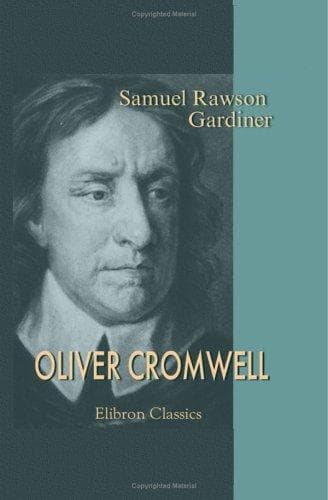
Cromwell, Oliver, 1599-1658; Great Britain -- History -- Commonwealth and Protectorate, 1649-1660
Not all the waters of the salt, salt sea
Could wash the balm from an anointed King.
Under whatever forms, Parliamentary or constitutional, he and no other
was to be the supreme arbiter, empowered to speak in due season the
decisive word--always just, always in the right. What was passing
before his eyes did but confirm him in his delusion. There had been
a quarrel between army and Parliament. Where was it to end unless he
sat in judgment to dispense equity to both? Against that will--call
it firm or obstinate, as we please--so inaccessible to the teaching
of facts, so clinging to the ideas which had inspired his life, the
pleadings of Cromwell and Ireton would be vain.
Of this Cromwell had no suspicion. He had never had personal dealings
with the King, and had little insight into his peculiar character. On
July 4 he saw him at Caversham, where Charles had been established,
in order that he might be near Reading, now the head-quarters of the
army. He fell at once under the charm of Charles's gracious manner, and
fancied that a few days would bring about an agreement. In full accord
with Fairfax, he hoped to establish the throne on a constitutional and
Parliamentary basis. Neither Charles nor any of those who were under
his influence could understand the sincerity of this purpose. The
French Ambassador, Bellièvre, seems to have sounded Cromwell on the
object of his ambition, and to have received the memorable reply: "No
one rises so high as he who knows not whither he is going". To Sir John
Berkeley, an ardent Royalist, Cromwell explained that the army asked
only 'to have leave to live as subjects ought to do, and to preserve
their consciences,' thinking that no man could enjoy his estates unless
the King had his rights. Probably Cromwell, in his conversation, had
emphasised the points which the army was willing to concede, and had
minimised those on which it expected Charles to yield. Charles, at
all events, was so convinced that the officers were prepared, almost
unconditionally, to restore him to his former power, that he gave it as
a reason for distrusting them, that they had not asked him for personal
favours in return. There can be no doubt that Cromwell refrained at
this time from pressing the King hardly. He was present at the meeting
of Charles with his children, now permitted to visit him for the first
time since the beginning of the civil war. Himself a devoted father,
he was touched by the affecting scene. The King, he told Berkeley, was
the 'uprightest and most conscientious man of his three kingdoms'. Yet
he was too keen-sighted to be blind to the other side of his character.
He wished, he said, that his Majesty would be more frank and not so
strictly tied to narrow maxims.
Public-domain text, read in full here on John Shaqi.
Reviews
Reviews
No reviews yet
Be the first to share your thoughts on this work.
Join the Discussion
Join the discussion
Sign in to leave a comment or review.
Sign InorCreate an account