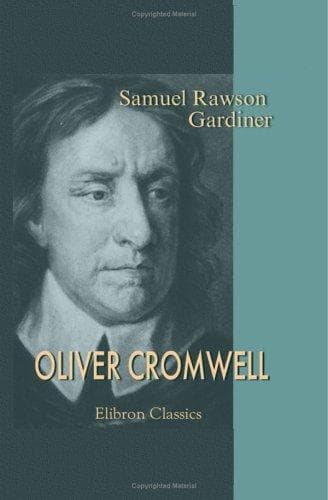
Cromwell, Oliver, 1599-1658; Great Britain -- History -- Commonwealth and Protectorate, 1649-1660
What could be the possible end of such demonstrations? Every time
they were employed, the appeal to force was placed more clearly
in evidence, in spite of all efforts to minimise it. Scarcely had
the regiments filed out of the City when the Presbyterian majority
reasserted itself in Parliament. On the other hand, the Agitators
raised their voices for a purge of Parliament which would thrust out
those members who had sat and voted under the influence of the mob.
Cromwell was growing impatient. "These men," he said of the eleven
members, some of whom had returned to their seats when the House was
under the dominion of the mob, "will never leave till the army pull
them out by the ears." "I know nothing to the contrary," he said on
another occasion, speaking of Holles and Stapleton, "but that I am as
well able to govern the kingdom as either of them." On this, the eleven
members left their seats for good and all, six of them taking refuge on
the Continent. Yet the majority in the Commons was Presbyterian still,
and refused to vote at the dictation of the army. Cromwell's patience
was exhausted. On August 20 he brought a cavalry regiment into Hyde
Park in order to obtain a vote that the proceedings of the House, in
the absence of the Speaker, had been null and void. Under this threat,
the majority gave way, and Cromwell, who had the whole army behind him,
gained his immediate end. Once more he was drifting forwards in the
direction of that military despotism which neither he nor his comrades
desired to establish.
The one way of escape still lay in an understanding with the King. With
the King, however, no agreement was possible. Charles, hopelessly at
fault in his judgment of passing events, stood aloof in the assurance
that the strife amongst the opponents would serve but to weaken both.
In the negotiations carried on with the army simultaneously with the
latest Parliamentary struggle, he fought every point stubbornly.
To extricate themselves from this difficulty, Cromwell and Ireton
joined in a vote for resuscitating the Newcastle propositions, and
allowed Charles to be formally requested to give his consent to
those extravagant Presbyterian demands. Charles, driven to the wall,
expressed his preference for _The Heads of the Proposals_. Cromwell and
Ireton contrived to persuade themselves that he was in earnest, and
gave their support to the King's demand for a personal negotiation with
Parliament on that basis.
Public-domain text, read in full here on John Shaqi.
Reviews
Reviews
No reviews yet
Be the first to share your thoughts on this work.
Join the Discussion
Join the discussion
Sign in to leave a comment or review.
Sign InorCreate an account