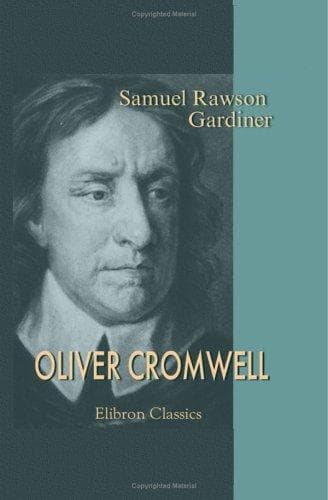
Cromwell, Oliver, 1599-1658; Great Britain -- History -- Commonwealth and Protectorate, 1649-1660
was unfitting that a tolerationist should give his support to the most
intolerant clergy in Protestant Europe. As a statesman, Cromwell could
but remember that unless England were to assume the direct control
over the Government of Scotland, it must leave such matters to local
decision, especially as there were few or no Independents in Scotland
to be wronged by any action which the new Government at Edinburgh
might take. Yet there was undoubtedly a danger for the future in the
divergency of aim between the followers of Argyle in Scotland and those
of Cromwell in England.
Cromwell transferred his forces into Yorkshire to hasten the surrender
of Pontefract and Scarborough, which still held out. The political
interest of the day had shifted to the South. Parliament, as soon as it
was relieved from danger, had determined to reopen the negotiation with
the King, and the conference--known as The Treaty of Newport--commenced
in the Isle of Wight on September 18. In the regiments under Cromwell's
command, as well as in Fairfax's army, the disgust was intense, and
Ireton now took the lead in calling for a purge of the House which
would get rid of such members as supported this piece of misplaced
diplomacy. To complete the dissatisfaction of the army, the demands
of Parliament included the establishment of Presbyterianism without
a shadow of toleration on either hand. It is unnecessary here to
follow up this negotiation in detail. The objection taken to Charles's
counter-proposals was less that they were themselves unjust, than
that it was impossible to hinder him from slipping out of his promise
whenever he felt strong enough to do so. Of this objection Ireton was
the mouthpiece in Fairfax's army, and on or about November 10, he laid
before the Council of officers the draft of a _Remonstrance of the
Army_. It touched on many constitutional proposals, but the clause
of the greatest practical interest asked 'that the capital and grand
author of all our troubles, the person of the King, may be speedily
brought to justice for the treason, blood and mischief he is therein
guilty of'. The suggestion was too much for Fairfax, and he carried
his officers with him in favour of a proposal that the army should ask
the King to assent to the heads of a constitutional plan which would
have reduced the functions of the Crown to that influence which is so
beneficially exercised at the present day.
Public-domain text, read in full here on John Shaqi.
Reviews
Reviews
No reviews yet
Be the first to share your thoughts on this work.
Elsewhere in the archive
Join the Discussion
Join the discussion
Sign in to leave a comment or review.
Sign InorCreate an account