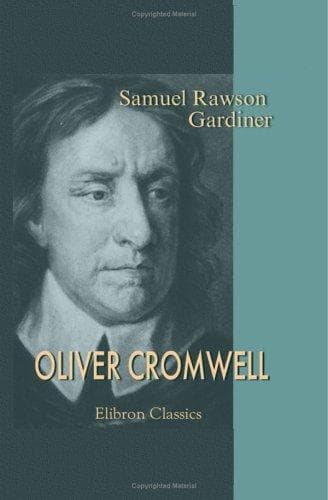
Cromwell, Oliver, 1599-1658; Great Britain -- History -- Commonwealth and Protectorate, 1649-1660
in religion and politics, and by the demands on the tax-payer which
the maintenance of the army rendered necessary, would surely have been
fatal to any government resting on such a basis, even if Charles had
been suffered to prolong his days. If there remains any interest in
Cromwell's career after the execution of the King it arises from his
constantly renewed efforts to throw off this incubus, and his repeated
failures to achieve his purpose.
CHAPTER IV.
THE LAST YEARS OF THE LONG PARLIAMENT.
During the last weeks of Charles's life, the army, in co-operation
with some of the Levellers, had drawn up an enlarged edition of _The
Agreement of the People_, a task which was completed on January 15.
In accordance with Cromwell's wish, this proposed constitution was
laid before Parliament on the 20th for its approval, instead of being
imposed on Parliament by a previous vote amongst the so-called well
affected. Parliament being sufficiently busy at the time, laid the
proposal aside with a few well-chosen compliments. The members had no
wish to engage, at such a moment, in the uncertainties of a general
election.
There can be little doubt that in this matter Parliament was
instinctively in the right. That mutilated Assembly to which modern
writers give the name of 'the Rump,' though no such word was employed
by contemporaries till its reappearance on the scene some time after
Cromwell's death, was in possession of the field. It now contented
itself with proclaiming England to be a Commonwealth without King or
House of Lords, and with electing an annually renewable Council of
State to perform executive functions under its own control. The first
political act of the sovereign Parliament was to order the execution
of the Duke of Hamilton, the Earl of Holland, and Lord Capel, who,
having taken the King's part in the last war, had been condemned by
a High Court of Justice, similar to the one that had sent Charles
to the block. For the moment the most serious danger to the young
Commonwealth arose from the opposition of Lilburne and the Levellers,
who, not content with asking, on the ground of abstract principles,
for the immediate foundation of a democratic Republic in the place of
the existing makeshift arrangement, extended their propaganda to the
army itself, appealing to the private soldiers against the officers.
Lilburne and three of his supporters were summoned before the Council.
Lilburne, having threatened to burn down any place in which he might be
imprisoned, was directed to retire. From the outer room he listened to
the voices in the Council chamber. "I tell you, sir," said Cromwell,
"you have no other way of dealing with these men but to break them,
or they will break you; yea, and bring all the guilt of the blood and
treasure shed and spent in this kingdom upon your heads and shoulders;
and frustrate and make void all that work that, with so many years'
industry, toil and pains you have done, and so render you to all
Public-domain text, read in full here on John Shaqi.
Reviews
Reviews
No reviews yet
Be the first to share your thoughts on this work.
Elsewhere in the archive
Join the Discussion
Join the discussion
Sign in to leave a comment or review.
Sign InorCreate an account