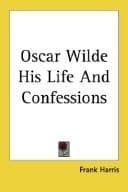
Oscar Wilde, His Life and Confessions — Volume 1Harris, Frank
History
Oscar Wilde, His Life and Confessions — Volume 1
Harris, Frank
Authors, Irish -- 19th century -- Biography; Wilde, Oscar, 1854-1900
It should be noted here that one of the bitterest of tongues could not help
doing homage to Oscar Wilde's "amiability": Whistler even preferred to call him
"amiable and irresponsible" rather than give his plagiarism a harsher attribute.
Oscar Wilde learned almost all he knew of art (confer Appendix: "Criticisms by
Robert Ross.") and of controversy from Whistler, but he was never more than a
pupil in either field; for controversy in especial he was poorly equipped: he
had neither the courage, nor the contempt, nor the joy in conflict of his great
exemplar.
Unperturbed by Whistler's attacks, Oscar went on lecturing about the country on
"Personal Impressions of America," and in August crossed again to New York to
see his play "Vera" produced by Marie Prescott at the Union Square Theatre. It
was a complete failure, as might have been expected; the serious part of it was
such as any talented young man might have written. Nevertheless I find in this
play for the first time, a characteristic gleam of humour, an unexpected flirt
of wing, so to speak, which, in view of the future, is full of promise. At the
time it passed unappreciated.
September, 1883, saw Oscar again in England. The platform gave him better
results than the theatre, but not enough for freedom or ease. It is the more to
his credit that as soon as he got a couple of hundred pounds ahead, he resolved
to spend it in bettering his mind.
His longing for wider culture, and perhaps in part, the example of Whistler,
drove him to Paris. He put up at the little provincial Hotel Voltaire on the
Quai Voltaire and quickly made acquaintance with everyone of note in the world
of letters, from Victor Hugo to Paul Bourget. He admired Verlaine's genius to
the full but the grotesque physical ugliness of the man himself (Verlaine was
like a masque of Socrates) and his sordid and unclean way of living prevented
Oscar from really getting to know him. During this stay in Paris Oscar read
enormously and his French, which had been schoolboyish, became quite good. He
always said that Balzac, and especially his poet, Lucien de Rubempre, had been
his teachers.
While in Paris he completed his blank-verse play, "The Duchess of Padua," and
sent it to Miss Mary Anderson in America, who refused it, although she had
commissioned him, he always said, to write it. It seems to me inferior even
to "Vera" in interest, more academic and further from life, and when produced
in New York in 1891 it was a complete frost.
In a few months Oscar Wilde had spent his money and had skimmed the cream from
Paris, as he thought; accordingly he returned to London and took rooms again,
this time in Charles Street, Mayfair. He had learned some rude lessons in the
years since leaving Oxford, and the first and most impressive lesson was the
fear of poverty. Yet his taking rooms in the fashionable part of town showed
that he was more determined than ever to rise and not to sink.
Public-domain text, read in full here on John Shaqi.
Reviews
Reviews
No reviews yet
Be the first to share your thoughts on this work.
Join the Discussion
Join the discussion
Sign in to leave a comment or review.
Sign InorCreate an account