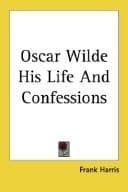
Oscar Wilde, His Life and Confessions — Volume 1Harris, Frank
History
Oscar Wilde, His Life and Confessions — Volume 1
Harris, Frank
Authors, Irish -- 19th century -- Biography; Wilde, Oscar, 1854-1900
It was Lady Wilde who urged him to take rooms near her; she never doubted
his ultimate triumph. She knew all his poems by heart, took the strass for
diamonds and welcomed the chance of introducing her brilliant son to the Irish
Nationalist Members and other pinchbeck celebrities who flocked about her.
It was about this time that I first saw Lady Wilde. I was introduced to her
by Willie, Oscar's elder brother, whom I had met in Fleet Street. Willie was
then a tall, well-made fellow of thirty or thereabouts with an expressive
taking face, lit up with a pair of deep blue laughing eyes. He had any amount
of physical vivacity, and told a good story with immense verve, without for a
moment getting above the commonplace: to him the Corinthian journalism of "The
Daily Telegraph" was literature. Still he had the surface good nature and good
humour of healthy youth and was generally liked. He took me to his mother's
house one afternoon; but first he had a drink here and a chat there so that we
did not reach the West End till after six o'clock.
The room and its occupants made an indelible grotesque impression on me. It
seemed smaller than it was because overcrowded with a score of women and half
a dozen men. It was very dark and there were empty tea-cups and cigarette ends
everywhere. Lady Wilde sat enthroned behind the tea-table looking like a sort
of female Buddha swathed in wraps--a large woman with a heavy face and prominent
nose; very like Oscar indeed, with the same sallow skin which always looked
dirty; her eyes too were her redeeming feature--vivacious and quick-glancing
as a girl's. She "made up" like an actress and naturally preferred shadowed
gloom to sunlight. Her idealism came to show as soon as she spoke. It was a
necessity of her nature to be enthusiastic; unfriendly critics said hysterical,
but I should prefer to say high-falutin' about everything she enjoyed or
admired. She was at her best in misfortune; her great vanity gave her a certain
proud stoicism which was admirable.
The Land League was under discussion as we entered, and Parnell's attitude
to it. Lady Wilde regarded him as the predestined saviour of her country.
"Parnell," she said with a strong accent on the first syllable, "is the man
of destiny; he will strike off the fetters and free Ireland, and throne her
as Queen among the nations."
A murmur of applause came from a thin birdlike woman standing opposite, who
floated towards us clad in a sage-green gown, which sheathed her like an
umbrella case; had she had any figure the dress would have been indecent.
"How like 'Speranza'!" she cooed, "dear Lady Wilde!" I noticed that her glance
went towards Willie, who was standing on the other side of his mother, talking
to a tall, handsome girl. Willie's friend seemed amused at the lyrical outburst
of the green spinster, for smiling a little she questioned him:
"'Speranza' is Lady Wilde?" she asked with a slight American accent.
Public-domain text, read in full here on John Shaqi.
Reviews
Reviews
No reviews yet
Be the first to share your thoughts on this work.
Join the Discussion
Join the discussion
Sign in to leave a comment or review.
Sign InorCreate an account