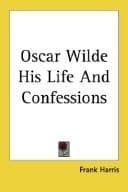
Oscar Wilde, His Life and Confessions — Volume 1Harris, Frank
History
Oscar Wilde, His Life and Confessions — Volume 1
Harris, Frank
Authors, Irish -- 19th century -- Biography; Wilde, Oscar, 1854-1900
Lady Wilde informed the company with all the impressiveness she had at command
that she did not expect Oscar that afternoon; "he is so busy with his new poems,
you know; they say there has been no such sensation since Byron," she added;
"already everyone is talking of them."
"Indeed, yes," sighed the green lily, "do you remember, dear Speranza, what he
said about 'The Sphinx,' that he read to us. He told us the written verse was
quite different from what the printed poem would be just as the sculptor's clay
model differs from the marble. Subtle, wasn't it?"
"Perfectly true, too!" cried a man, with a falsetto voice, moving into the
circle; "Leonardo himself might have said that."
The whole scene seemed to me affected and middle-class, untidy, too, with an un-
English note about it of shiftlessness; the aesthetic dresses were extravagant,
the enthusiasms pumped up and exaggerated. I was glad to leave quietly.
It was on this visit to Lady Wilde, or a later one, that I first heard of that
other poem of Oscar, "The Harlot's House," which was also said to have been
written in Paris. Though published in an obscure sheet and in itself
commonplace enough it made an astonishing stir. Time and advertisement had been
working for him. Academic lectures and imitative poetry alike had made him
widely known; and, thanks to the small body of enthusiastic admirers whom I have
already spoken of, his reputation instead of waning out had grown like the Jinn
when released from the bottle.
The fuglemen were determined to find something wonderful in everything he did,
and the title of "The Harlot's House," shocking Philistinism, gave them a
certain opportunity which they used to the uttermost. On all sides one
was asked: "Have you seen Oscar's latest?" And then the last verse would be
quoted:--"Divine, don't ye think?"
"And down the long and silent street,
The dawn, with silver-sandalled feet,
Crept like a frightened girl."
In spite of all this extravagant eulogy Oscar Wilde's early plays and poems,
like his lectures, were unimportant. The small remnant of people in England who
really love the things of the spirit were disappointed in them, failed to find
in them the genius so loudly and so arrogantly vaunted.
But, if Oscar Wilde's early writings were failures, his talk was more successful
than ever. He still tried to show off on all occasions and sometimes fell flat
in consequence; but his failures in this field were few and merely comparative;
constant practice was ripening his extraordinary natural gift. About this time,
too, he began to develop that humorous vein in conversation, which later lent a
singular distinction to his casual utterances.
His talk brought him numerous invitations to dinner and lunch and introduced him
to some of the best houses in London, but it produced no money. He was earning
very little and he needed money, comparatively large sums of money, from week
to week.
Public-domain text, read in full here on John Shaqi.
Reviews
Reviews
No reviews yet
Be the first to share your thoughts on this work.
Join the Discussion
Join the discussion
Sign in to leave a comment or review.
Sign InorCreate an account