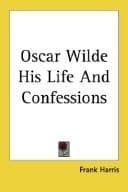
Oscar Wilde, His Life and Confessions — Volume 1Harris, Frank
History
Oscar Wilde, His Life and Confessions — Volume 1
Harris, Frank
Authors, Irish -- 19th century -- Biography; Wilde, Oscar, 1854-1900
It was a pity, I sometimes felt, that he had not studied German as thoroughly
as French; Goethe might have done more for him than Baudelaire or Balzac, for
in spite of all his stodgy German faults, Goethe is the best guide through the
mysteries of life whom the modern world has yet produced. Oscar Wilde stopped
where the religion of Goethe began; he was far more of a pagan and individualist
than the great German; he lived for the beautiful and extraordinary, but not for
the Good and still less for the Whole; he acknowledged no moral obligation; "in
commune bonis" was an ideal which never said anything to him; he cared nothing
for the common weal; he held himself above the mass of the people with an
Englishman's extravagant insularity and aggressive pride. Politics, social
problems, religion--everything interested him simply as a subject of art; life
itself was merely material for art. He held the position Goethe had abandoned
in youth.
The view was astounding in England and new everywhere in its onesidedness.
Its passionate exaggeration, however, was quickening, and there is, of course,
something to be said for it. The artistic view of life is often higher than
the ordinary religious view; at least it does not deal in condemnations and
exclusions; it is more reasonable, more catholic, more finely perceptive.
"The artist's view of life is the only possible one," Oscar used to say,
"and should be applied to everything, most of all to religion and morality.
Cavaliers and Puritans are interesting for their costumes and not for their
convictions. . . .
"There is no general rule of health; it is all personal, individual. . . . .
I only demand that freedom which I willingly concede to others. No one
condemns another for preferring green to gold. Why should any taste be
ostracized? Liking and disliking are not under our control. I want to
choose the nourishment which suits "my" body and "my" soul."
I can almost hear him say the words with his charming humorous smile and
exquisite flash of deprecation, as if he were half inclined to make fun of
his own statement.
It was not his views on art, however, which recommended him to the aristocratic
set in London; but his contempt for social reform, or rather his utter
indifference to it, and his English love of inequality. The republicanism he
flaunted in his early verses was not even skin deep; his political beliefs and
prejudices were the prejudices of the English governing class and were all in
favour of individual freedom, or anarchy under the protection of the policeman.
Public-domain text, read in full here on John Shaqi.
Reviews
Reviews
No reviews yet
Be the first to share your thoughts on this work.
Join the Discussion
Join the discussion
Sign in to leave a comment or review.
Sign InorCreate an account