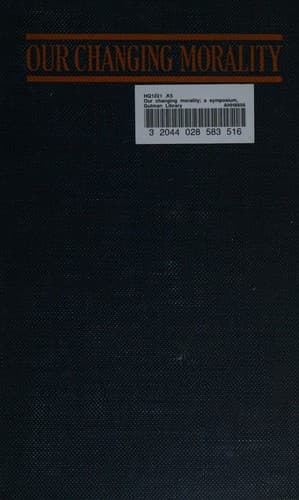
OUR
CHANGING MORALITY
_A SYMPOSIUM_
EDITED BY
FREDA KIRCHWEY
ALBERT & CHARLES BONI
NEW YORK 1924
COPYRIGHT, 1924, BY ALBERT & CHARLES BONI, INC.
_Printed in the United States of America by_
J. J. LITTLE AND IVES COMPANY, NEW YORK
INTRODUCTION
BY FREDA KIRCHWEY
The subject of sex has been treated in this generation with a strange,
rather panic-stricken lack of balance. Obscenity hawks its old wares
at one end of the road and dogmatic piety shouts warnings at the
other--while between is chaos. And the chaos extends beyond ideas and
talk, beyond novels and scenarios and Sunday feature stories, into the
realm of actual conduct. Religion has indeed found substantial matter
for its words of caution and disapproval: never in recent generations
have human beings so floundered about outside the ropes of social and
religious sanctions.
But while John Roach Straton and Billy Sunday point a pleasant way
toward hell, while sensationalism finds in new manners of life subject
for five-inch headlines, and while modern novelists make their modern
characters stumble through pages of inner conflict to ends of darkness
and desperation, a few people are at work quietly sorting out the
elements of chaos and holding fragments of conduct up in the sun and
air to find what they really are made of.
No one seeks to argue chaos away. Certainly Mr. Straton and Mr. Sunday
are right: Men and women are ignoring old laws. In their relations
with each other they are living according to tangled, conflicting
codes. Remnants of early admonitions and relationships, the dictates of
custom, the behavior of their friends, their own tastes and desires,
elusive dreams of a loveliness not provided for by rules--all these are
scrambling to fill the gap that was left when Right and Wrong finally
followed the other absolute monarchs to an empty, nominal existence
somewhere in exile. But the traditional, ministerial method with chaos
was not Jehovah’s method. He brought order and light into the world;
but the way of our current moralists has been to clamp down the hatches
even though “sin” bubbled beneath. A few courageous, matter-of-fact
glances into the depths have been embodied in the articles in this
volume. The men and women who have written them have approached the
subject variously; the fragments they have brought up to examine do
not necessarily fit together. But none of these writers is afraid to
saunter up to the edge and see what moral disorder looks like.
Public-domain text, read in full here on John Shaqi.
Reviews
Reviews
No reviews yet
Be the first to share your thoughts on this work.
Join the Discussion
Join the discussion
Sign in to leave a comment or review.
Sign InorCreate an account