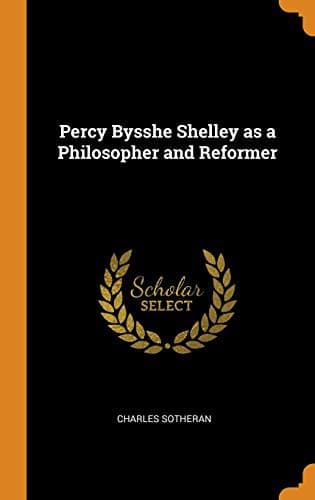
Percy Bysshe Shelley as a Philosopher and Reformer — John Shaqi
Percy Bysshe Shelley as a Philosopher and ReformerSotheran, Charles
Philosophy
Percy Bysshe Shelley as a Philosopher and Reformer
Sotheran, Charles
Shelley, Percy Bysshe, 1792-1822 -- Philosophy; Shelley, Percy Bysshe, 1792-1822 -- Political and social views
On September 6th, 1819, a red letter day was added to the English
calendar, through the slaughter by cavalry of a number of unarmed men,
who were agitating, peaceably, for the rights of labor. This is known
to posterity as the "Peterloo Massacre," and happened in Manchester,
on the site of the present superb Free Trade Hall, erected by the Free
Traders to commemorate the ultimate triumph of their cause over the
capitalists, who, in the manufacturing districts, were, until a few
years back, always aided by the military in putting down strikes or
demands for increase of wages.
At the time of this outrage Shelley was in Italy; in consequence of it
his attention was concentrated more than previously on the labor
question, and he immediately composed half a dozen in spiriting poems,
full of the fire of genius; in one of which he calls, with a voice of
thunder, to the
I.
"Men of England! wherefore plough
For the lords who lay ye low?
Wherefore weave, with toil and care,
The rich robes your tyrants wear?
II.
Wherefore feed and clothe and save,
From the cradle to the grave,
Those ungrateful drones who would
Drain your sweat--nay, drink your blood?
III.
Wherefore, bees of England, forge
Many a weapon, chain, and scourge,
That these stingless drones may spoil
The forced produce of your toil?
IV.
Have ye leisure, comfort, calm,
Shelter, food, love's gentle balm?
Or what is't ye buy so dear
With your pain, and with your fear?
V.
The seed ye sow, another reaps;
The wealth ye find another keeps;
The robes ye weave, another wears;
The arms ye forge, another bears.
VI.
Sow seed--but let no tyrant reap;
Find wealth--let no impostor heap;
Weave robes--let not the idle wear;
Forge arms--in your defence to bear.
VII.
Shrink to your cellars, holes, and cells;
In halls ye deck, another dwells.
Why shake the chains ye wrought? Ye see
The steel ye tempered, glance on ye!
VIII.
With plough and spade, and hoe and loom,
Trace your grave, and build your tomb,
And weave your winding sheet, till fair
England be your sepulchre!"
By far the finest composition brought out by this occasion was the
"Masque of Anarchy," a magnificent poem of ninety-one verses. "Anarchy"
he describes as riding "on a white horse,"[E] in alliance with
theology and statecraft, and whose admirers were "lawyers and
priests."
[Footnote E: This doubtless alludes to the House of Hanover, the
principal charge on whose armorial bearings is a white horse.]
Public-domain text, read in full here on John Shaqi.
Reviews
Reviews
No reviews yet
Be the first to share your thoughts on this work.
Join the Discussion
Join the discussion
Sign in to leave a comment or review.
Sign InorCreate an account