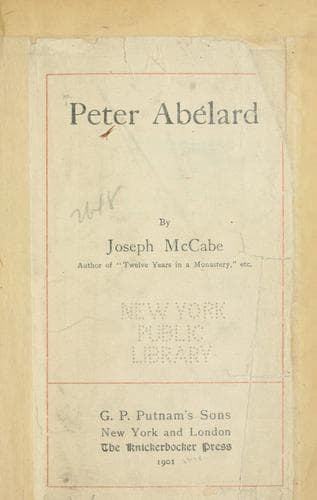
Abelard, Peter, 1079-1142; Theologians -- France -- Biography; Theology -- History -- Middle Ages, 600-1500
In the circumstances it makes little difference to the prestige
of Abélard whether we succeed in proving a direct influence or no.
There are few who will think less of him because he was beaten by
St. Bernard in diplomatic manipulation of the political force of the
Church. The times were not ripe for the acceptance of his particular
criticisms, and the mystic school was the natural expression of this
conservatism. We may even doubt if Deutsch is correct in saying that
the thirteenth century was prepared to receive them, but that its
attention was diverted to Spain. Renan has said that they who study
the thirteenth century closely are astonished that Protestantism did
not arise three hundred years earlier. That is the point of view of
a logician. The Reformation was not in reality, though it seems such
in theory to the student of the history of ideas, an intellectual
development. No doubt it could not have succeeded without this
development to appeal to, but it was a moral and political revolt.
How little the world was prepared for such a revolt at the end of
the thirteenth century may be gathered from a study of the life of
that other rebellious monk, William Occam. This success the Anselms
and Bernards achieved: they spread, with a moral renovation, a
spirit of docility and loyalty to the Church. The subtlety and
intellectual activity they could not arrest came to be used up in an
effort to restate the older dogmas in terms which should be at once
conservative and acceptable to the new rational demand.
Public-domain text, read in full here on John Shaqi.
Reviews
Reviews
No reviews yet
Be the first to share your thoughts on this work.
Elsewhere in the archive
Join the Discussion
Join the discussion
Sign in to leave a comment or review.
Sign InorCreate an account