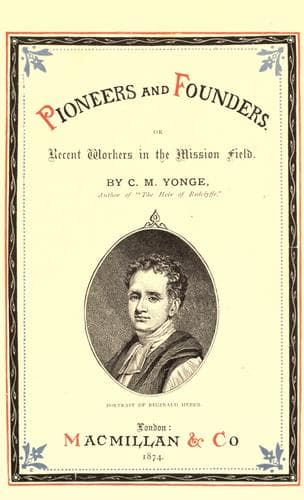
Pioneers and Founders: or, Recent Workers in the Mission fieldYonge, Charlotte M. (Charlotte Mary)
History
Pioneers and Founders: or, Recent Workers in the Mission field
Yonge, Charlotte M. (Charlotte Mary)
Missionaries
The most remarkable events that befell the Serampore Mission from this
time were either domestic, or related to their connection with the
College at Fort William, and the sanction they received from Government.
Lord Wellesley went home in 1805, Colonel Bie died the same year, and
these were most serious losses to the cause of the Serampore mission.
Lord Wellesley had followed his own judgment, and carried things with a
high hand, often against the will of the East India Company, and there
was a strong desire to reverse his policy. His successor, Lord
Cornwallis, died two months after landing, and Sir George Barlow, who
carried on the government in the interregnum, though a good man, had not
force enough to withstand the dislike of the Anglo-Indians to the
mission. Mr. Ward made an attempt at Calcutta to preach in Hindoo in a
chapel, the ground of which had been purchased by the missionaries, but
as he walked through the streets the people shouted, "That's the Hindoo
padre; why dost thou destroy the caste of the people?" And when, two
Sundays later, a preacher of Brahmin birth appeared, there were loud
cries of indignation. "O vagabond," cried one man, "why didst thou not
come to my house? I would have given thee a handful of rice rather than
that thou shouldst have become a Feringhee!" In spite of these cries,
however, the chapel was thronged, until, after the third Sunday, when an
order came forth from the magistrates, forbidding the missionaries either
to preach, allow their converts to preach, distribute tracts, or even
argue with the natives--or in anyway "interfere with their prejudices"--in
Calcutta; and two new missionaries, named Chater and Robinson, who had
come out without a licence, were prohibited from proceeding to Serampore.
Considering that these orders emanated only from a Provisional Government
during an interregnum, and that there was every hope that they might be
reversed by the next Governor-General, the missionaries resolved to
submit to them for the time, and to abstain from working in Calcutta.
Early in the year 1806, however, the animosity of the English East
Indians was increased by a mutiny that broke out among the Sepoys at
Vellore, in the Madras Presidency, in consequence of some regulations as
to their dress, which they resented as being supposed to assimilate them
to Europeans. The English colonel and all his garrison were massacred,
and, though the mutineers were surrounded and destroyed, great alarm
prevailed. The discontent of the Sepoys was attributed to their
displeasure at the spread of Christianity, and it was even averred that
the lives of the English in India could only be preserved by the recall
of all the missionaries!
Public-domain text, read in full here on John Shaqi.
Reviews
Reviews
No reviews yet
Be the first to share your thoughts on this work.
Elsewhere in the archive
Join the Discussion
Join the discussion
Sign in to leave a comment or review.
Sign InorCreate an account